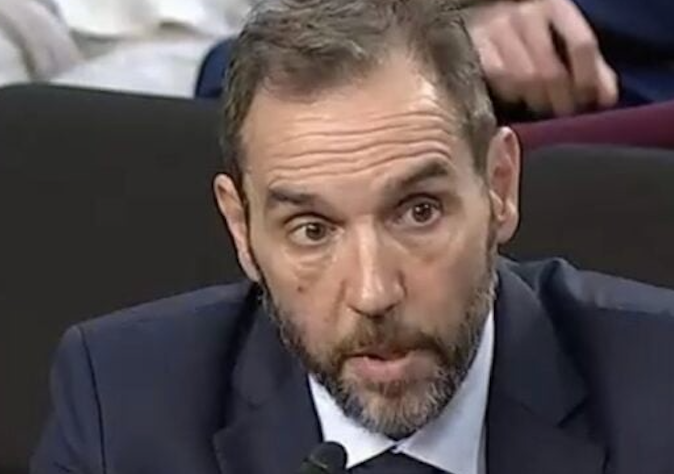
Former special counsel Jack Smith’s office obtained personal information on at least 639,000 Republican donors, voters, and supporters. The data covered names, dates of birth, home and email addresses, party registration, occupations, employers, donation amounts as low as one dollar, and the last four digits of credit cards. It reached back to contributions from 2005. Separate records captured buyers of red Make America Great Again hats, including their names, what they purchased, and the addresses where the hats were shipped. A catalogue of other campaign products—t-shirts, mugs, door mats—was collected as well.
The information came through subpoenas issued during the Arctic Frost investigation into the 2020 election and related events. Earlier disclosures had already shown that Smith’s team acquired at least 4,782 individual donor checks, mostly small-dollar amounts, from people in every state. The broader spreadsheets went further. They included not only campaign personnel and volunteers but ordinary citizens whose only apparent connection was a modest contribution or a merchandise purchase.
DOJ Kept Secret Records On MAGA Hat Buyers
@willcain Cain and @VinceAugust21 react to a shocking report from Senator Chuck Grassley revealing that special prosecutor Jack Smith maintained a database tracking Americans who purchased MAGA hats. They detail how personal addresses, credit card info, and donation records were logged and question the true intent behind collecting this data on private citizens.
Watch Will Cain Country for hard-hitting, unfiltered commentary on politics, government accountability, and constitutional rights.
— The Will Cain Show (@WillCainShow) October 17, 2026
How Far the Collection Reached
Senate Judiciary Committee Chairman Chuck Grassley released the details in an October 14 memo based on subpoena returns and whistleblower material. He described the collection as invasive and beyond what was necessary for the special counsel’s mandate. The records were shared with FBI agents. Occupations listed in the data included janitor, doorman, pool technician, driver, logger, and retired worker. The geographic reach covered most states and territories.
Smith testified before the same committee on September 29. Asked whether his office had obtained donor financial information, he answered yes. He said the subpoenas were issued to investigate serious crimes and that he had a duty to collect facts. He did not dispute the scale of the records his team received.
EXCLUSIVE: New whistleblower reporting via @ChuckGrassley reveals that personal payroll data for the Conservative Partnership Institute (CPI) was collected by Jack Smith’s team.
The financial data included CPI employees’ medical, dental, and vision insurance coverage, along with a CPI bank statement.
BACK STORY: In fall 2025, Grassley revealed that CPI was one of 430 groups subpoenaed or targeted by Jack Smith as part of the Arctic Frost probe, which laid the foundation for the Jan. 6 investigation.
The new reporting shows that Smith’s collection of data and financial records was broader than previously reported.
While Smith had a mandate to investigate Jan. 6, the collection of CPI’s February 2023 payroll data appears to go beyond the scope.
Critics, including Grassley and @SenJudiciaryGOP say Smith’s sweeping data collection aimed to map the entire Republican network.
NOTE: Combining data sets from donors, voter registration, lawmakers’ phone records (not contents), and financial transactions is far more revealing and intrusive.
It can reveal a network as well as the frequency of the contact and strength of relationship.
Smith has defended the overall investigation as fact-driven and non-political.
— Catherine Herridge (@C__Herridge) October 16, 2026
Whether Smith Faces Any Reckoning
Smith is no longer special counsel. The criminal cases he brought against the former president were dismissed or otherwise ended after the 2024 election. No criminal charges have been filed against Smith himself arising from the scope of these subpoenas. Special counsels possess broad authority to demand records in a criminal investigation. The central dispute is whether the volume and age of the data—reaching years before the events under examination—exceeded any legitimate need.
Congressional oversight continues. Grassley has called the effort an abuse of authority aimed at mapping the Republican Party apparatus and has urged further review. Whether that review produces more than public criticism remains open. Prosecutors who operate under court-approved subpoenas are rarely charged for the breadth of what they obtain unless clear evidence emerges of falsified justifications or other independent misconduct. Nothing of that kind has been alleged in the available records. The practical result, for now, is a large set of personal details on ordinary donors and hat buyers that was gathered, retained, and shared inside the investigation, with no public indication that any of those individuals were targets of criminal charges.