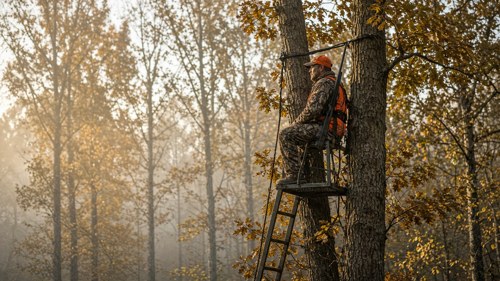
Deer season is in full swing across much of the country, and for many hunters that means hours in a tree stand. That makes this a good week to go over the habits that keep a hunter from falling.
State wildlife agencies repeat the same message every fall, and Virginia’s latest numbers show why. In Virginia, the Department of Wildlife Resources reported 10 tree stand incidents during the 2024-25 season, including one death. Nine of the 10 hunters were not using a safety harness. The one who was wearing a harness was not attached to the tree.
Remember your ABCs
Virginia’s wildlife department promotes a simple checklist developed by the Tree Stand Safety Awareness Foundation:
A: Always remove and inspect your equipment. Practice at ground level.
B: Buckle on your full-body safety harness securely.
C: Connect to the tree before you leave the ground, and slow down.
D: Destination. Share your stand location for each hunt.
Stay connected the whole time
The Wisconsin Department of Natural Resources says to use a fall-restraint device every time you hunt above the ground, whether you use a ladder stand, a tower stand or a hang-on stand.
A full-body harness only works if you are connected. Use a lifeline when climbing up and down, so you are attached from the moment you leave the ground until the moment you are back on it. Once seated, keep the tether between you and the tree short. Wisconsin’s guidance notes the tether is designed to keep you in the seat, not to catch you after you fall.
Keep three points of contact while climbing: two hands and one foot, or two feet and one hand.
Never climb with your gun or bow
Unload your gun or bow before climbing or coming down. Tie a haul line to your belt or stand to keep your hands free, then use it to raise and lower your unloaded firearm, bow and pack from the ground.
Check your stand and your tree
Inspect your stand for damage before the season and before and after each use. Read the manufacturer’s instructions, do not alter the equipment, and attach the stand securely to a straight, healthy tree big enough to hold your weight. Wisconsin’s research found that hunters who ended up in trauma centers had not considered that wood can rot, steps can snap, railings can fail and climbers can slip.
Be especially careful in rain, snow and ice, and stay out of the stand if you are tired, sick or on medication.
Plan for the worst
Wisconsin warns that suspension trauma, which can happen when a hunter hangs in a harness after a fall, can set in in less than 20 minutes and can be fatal. An extra foot strap attached to the harness takes pressure off your legs while you wait for help or work your way down.
Tell someone where you will hunt, where you will park and when you plan to return. Virginia suggests leaving a map on your dashboard. Carry a charged cell phone, whistle, radio or strobe on your person, and wear blaze orange in the stand.
If you are new to tree stands, a free online course from the Treestand Manufacturers Association takes about 15 minutes, Wisconsin says. A short course and a harness are a small price for coming home from every hunt.