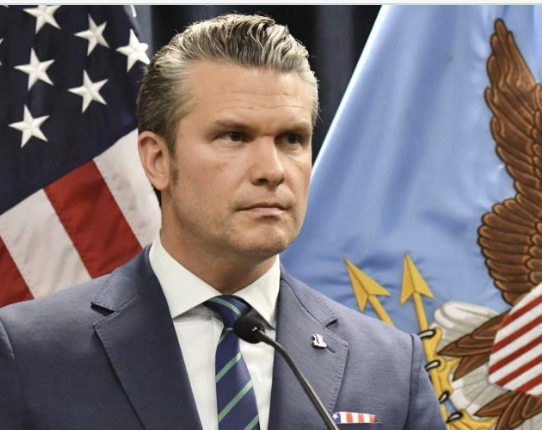
Secretary of War Pete Hegseth made an unannounced visit to Caracas on Wednesday and signed an agreement restoring military cooperation between the United States and Venezuela, the first visit by a Pentagon chief since U.S. forces captured Nicolás Maduro on Jan. 3.
Hegseth met acting President Delcy Rodríguez at Miraflores Palace and signed the deal with Venezuelan Defense Minister Gustavo González López, MercoPress reported. The agreement covers joint training, strategic cooperation, intelligence sharing and the supply of defense equipment, according to MercoPress. It restores ties that Hugo Chávez cut off in 2005, after which Venezuela turned to Russia, Iran and China for its weapons.
Venezuela “has gone from our most aggressive regional threat to a compliant security partner,” Hegseth said, according to the Associated Press.
“Your time is up”
Speaking at the U.S. Embassy, Hegseth called the Maduro raid “the single most sophisticated military operation in the history of Latin America” and said it “lasted just 48 minutes.” He said the result was, as Maduro himself had predicted, “no war, yes peace.”
He said the new partnership is not “cosmetic” and requires rooting out narco-terrorist networks, Breitbart reported. “We will hunt you down, we will find you, and we will kill you,” he said of the cartels. MercoPress quoted him telling the same groups, “To the narco-terrorists who have used this as a safe haven, your time is up.”
Breitbart, citing Venezuelan outlets, reported that Hegseth went for a run at El Laguito, a park on the edge of the Fuerte Tiuna military complex where U.S. forces seized Maduro and his wife, Cilia Flores.
What Caracas said
Rodríguez said the deal “benefits both the people of the United States and the people of Venezuela,” according to the AP. Venezuelan state outlet VTV quoted her saying, “We are resuming this cooperation, and I hope we can take it to the highest possible level.” She also thanked the United States for its help after the June earthquake, when about 2,000 U.S. troops deployed to assist.
González López, in his first statement since taking office, said the cooperation will respect Venezuela’s “sovereignty, independence and territorial integrity.”
The two militaries have already been working together. MercoPress, citing the Spanish newspaper El País, reported that the U.S. provided equipment and intelligence for a June raid on the hideout of a Tren de Aragua leader in Bolívar state and a drone strike on a National Liberation Army (ELN) base in Apure.
Oil and the Iran war
Hegseth tied the partnership to the war with Iran. He said the U.S.-Venezuela oil arrangement “makes the Strait of Hormuz a non-factor for the Western Hemisphere,” the AP reported. Alejandro Betancourt, whose North American Blue Energy Partners has an agreement with the U.S. government to tap Venezuelan reserves, attended the speech.
Venezuela has not set a date for its next presidential election. Rodríguez’s court-approved term expired in July, and she has stayed on as head of state. Secretary of State Marco Rubio has called opposition leader María Corina Machado’s recent return from exile “the best opportunity” Venezuela has had in three decades for free and fair elections.
Hegseth’s tour also took him to Bogotá, where Colombian Defense Minister Jorge Eduardo Mora said Hegseth would hand over a first C-130 Hercules aircraft and that “I think two more are coming,” Reuters reported.
The bottom line
For a quarter century Venezuela was a base for Russian arms, Iranian influence and cocaine traffickers in America’s own hemisphere. Ten months after the raid on Fuerte Tiuna, the U.S. secretary of war is signing a defense agreement at Miraflores and the country’s oil is helping cushion Americans from Iran’s grip on the Strait of Hormuz. That is a historic turnaround in the hemisphere, achieved in under a year.
The job is not finished. Rodríguez was a Maduro ally, and her court-approved term has run out. Washington should use its new leverage, including the military aid now on the table, to hold Caracas to a firm date for free elections with Machado and the opposition on the ballot.
The administration has shown that strength in the hemisphere produces results. It should keep the pressure on the cartels and on the interim government until Venezuelans choose their own leaders.