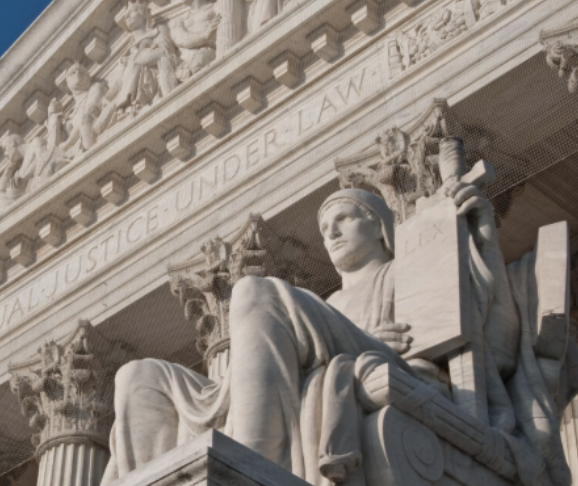
A consequential Supreme Court case is unfolding that goes right to the heart of the U.S. Constitution’s separation of powers—but it’s flying under the radar of most Americans and far too many news outlets.
At its core is a deceptively simple question with enormous constitutional significance: who actually governs the executive branch of the United States? Is it the elected president, accountable to the voters? Or is it an entrenched class of unelected agency officials whose power has grown unchecked over the past century? (BlabberBuzz)
Why This Case Matters More Than Most People Realize
For over 100 years, Congress has increasingly delegated its legislative responsibilities to federal agencies—bureaucratic entities that write rules, enforce them, and often adjudicate disputes. In doing so, lawmakers have effectively created a fourth branch of government, one that operates outside the usual constitutional checks that bind the other three (legislative, executive, and judicial).
This case centers on whether the President—even though he was elected by the entire nation—can remove the officials in charge of these powerful agencies. If the Court rules that he cannot, then in practice a large portion of federal power will be in the hands of officials whom the public never elected and cannot remove.
That’s not a minor procedural dispute. That’s a question about the very nature of self-government in America.
More Than Bureaucracy—It’s About Democracy Itself
The framers of the Constitution deliberately vested “executive power” in one person, the President, who is subject to election and the possible removal by the voters. He is the only person who is elected by all. This was meant to ensure accountability and to prevent power from diffusing into faceless institutions beyond democratic oversight.
But if bureaucratic officials can wield sweeping rulemaking and enforcement authority—and if they can’t be removed at the president’s discretion—then the ability of citizens to shape government through elections becomes illusory. Their preferences may influence the selection of a president, but not the actual execution of federal power.
Put bluntly: this case could decide whether the United States remains a constitutional republic where elected leaders govern—or becomes something closer to a permanent technocratic state.
A Constitution in Danger of Becoming a “Suggestion”
Despite its significance, this case hasn’t broken through in major media, and many Americans are unaware of what’s at stake. Yet the implications are profound:
- An adverse ruling could cement agency autonomy and weaken elected control over the executive branch.
- It could reshape the balance of power between the presidency and Congress.
- It could make federal agencies a permanent class of governing officials—effectively insulated from democratic consequences.
This isn’t about “bureaucratic housekeeping.” It’s about whether the Constitution’s structure still has real force, or whether it has been quietly hollowed out so that unaccountable officials determine policy irrespective of the will of the people.
Why We Should Be Paying Attention Now
The Court’s decision will have ripple effects for decades. It will shape debates over agency power, presidential authority, congressional delegation, and the core principle that those who govern must ultimately answer to those who elect them. Yet most citizens remain unaware that this constitutional crossroads is right in front of them.
This is not a policy skirmish. It is a constitutional moment—one that goes to the very heart of how American government is supposed to function.