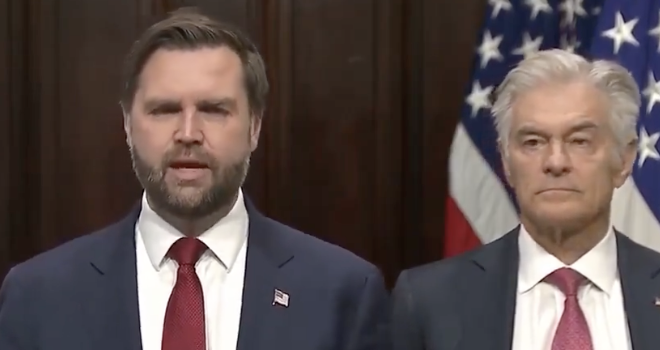
Vice President JD Vance and CMS Administrator Dr. Mehmet Oz stood in front of the cameras on May 13 and delivered the kind of no-nonsense update that makes every working stiff who pays taxes want to stand up and cheer. They announced they had just kicked nearly 800 fraudulent hospice providers off the Medicare rolls—providers concentrated in the Los Angeles area who had been billing the federal government $1.4 billion last year alone for services that were either never provided or never needed. Vance couldn’t hide his reaction when Oz dropped the stat: not a single one of those 800 outfits called the government to complain they’d been wrongly suspended. A handful of calls came in—fewer than twenty—and those are still being audited. Vance’s double-take said it all: “Unbelievable… At least 780 are not even trying to claim that they’re not fraudulent?” Those were businesses we were handing hundreds of millions—in some cases billions—to, not to provide real care, but to make fraudsters rich.
This wasn’t some vague policy speech. It was the public face of the White House Task Force to Eliminate Fraud that Vance has been running since the administration took office. Oz laid out the details in plain English: at least half the hospices in the entire Los Angeles region showed major red flags. The administration has already suspended payments to those 800, and they’re moving fast on the rest. On top of that, CMS imposed an immediate six-month nationwide moratorium on all new Medicare enrollments for hospice and home-health agencies. No more bad actors slipping in the back door while they clean up the mess already inside.
VP VANCE: “So you’re saying that we kicked off 800 fraudulent healthcare providers off of the Medicare system, and not a single one of them called the government and said, ‘hey, you made a mistake?'”
DR. OZ: “We’ve had a handful of calls. We’re not sure they’re legitimate yet,… pic.twitter.com/HqYIltYhcT
— Fox News (@FoxNews) May 13, 2026
The Broader Crackdown That’s Finally Hitting Where It Hurts
The announcement didn’t stop at Medicare providers. Vance put every state on notice: if you don’t aggressively prosecute Medicaid fraud in your own backyard, the federal money that funds your anti-fraud units gets turned off. California got hit first and hardest—$1.3 billion in Medicaid payments deferred because state records raised “major red flags” on everything from home health services to disputed eligibility. The message was clear: the days of writing blank checks to states that treat fraud like a feature, not a bug, are over. Taxpayers aren’t an ATM for shady operators anymore.
Oz emphasized that hospice and home-health have become a “key source of fraudulent activity” across the country. The task force is using data analytics, targeted investigations, and old-fashioned audits to rip out the rot. This 800-provider purge is just the opening salvo. The moratorium buys time to vet new applicants and go after the ones already in the system that don’t belong there.
What This Means for the People Who Actually Pay the Bills
Every dollar these fraudsters billed was a dollar taken straight out of the pockets of working Americans who pay into Medicare and Medicaid through payroll taxes and premiums. $1.4 billion from those 800 hospices alone is real money—money that could have gone to actual seniors who need care instead of padding the pockets of operators who gamed the system. Multiply that across the hundreds of other providers still under review and the nationwide pattern Oz described, and the savings start adding up fast.
This isn’t abstract waste. It’s the kind of industrial-scale theft that drives up premiums, crowds out legitimate care, and leaves honest taxpayers wondering why their money disappears into black holes while they struggle to cover their own doctor bills. By yanking these providers, the administration is protecting the programs for the people who actually earned the benefits. No more subsidizing ghost services and fake billing. The task force is turning Medicare and Medicaid back into safety nets instead of slush funds.
How Deep the Fraud Really Goes—And Why This Is Only the Beginning
The numbers Oz and Vance laid out point to something much bigger than 800 bad actors in Los Angeles. Oz has publicly estimated that $100 billion of theft is happening across Medicare and Medicaid combined—every year. That’s not a rounding error. That’s systemic, baked-in fraud that previous administrations either ignored or treated as the cost of doing business. The fact that almost none of the suspended providers even bothered to protest tells you everything: they knew they were scamming the system, and they knew the gravy train was finally hitting the brakes.
When the task force finishes unraveling the full picture, expect the totals to climb. The moratorium on new enrollments is designed to stop the pipeline while they audit the existing ones. Data analytics are flagging patterns that were ignored for years—ghost patients, overbilling, kickback schemes, and entire networks set up solely to harvest federal dollars. California’s deferred $1.3 billion is a warning shot to every other state that thought they could look the other way. The deeper they dig, the more fraud they’ll find, because the system was built to reward volume over verification.
The America First bottom line is straightforward: this is what real government efficiency looks like. For years taxpayers funded a Medicare and Medicaid system that treated fraud as an acceptable business expense. Vance and Oz just flipped the script. Eight hundred providers down, billions saved, and a nationwide crackdown that puts patients and payers first. The full scope of the rot is still coming into focus, but one thing is already clear: the days of writing blank checks to fraud factories are over. Taxpayers just got a seat at the table, and the fraudsters are finally being shown the door.