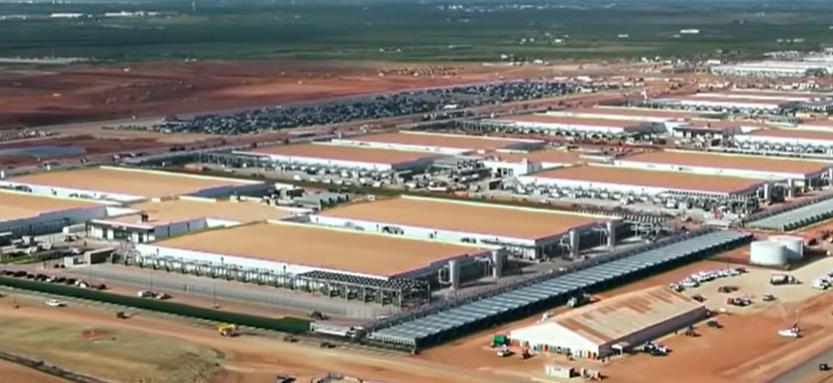
Americans are waking up to a low, constant drone that never stops. It rolls out of massive windowless buildings rising on farmland and industrial edges from Virginia to Texas to the Midwest. The servers inside never sleep. Neither does the noise. Neither, increasingly, do the neighbors.
Data centers powering the artificial intelligence boom have become the unexpected flashpoint of the 2026 midterms. Democrats have seized on them as Exhibit A in a campaign of fear: they drain the grid, suck up water, poison the air with diesel generators, and fill the night with an unhealthy electronic hum that some residents swear is making them sick. Pair that with deep public distrust of AI itself—job-killing algorithms, deepfakes, surveillance—and you have a potent political weapon. The question is whether it decides races or merely colors them.
The Real Numbers Behind the Panic
The power appetite is no exaggeration. U.S. data centers already consume roughly 4.7 percent of national electricity. Projections show that share climbing toward 9.5 to 15 percent by 2030 under different growth scenarios, with a mid-range estimate near 12 percent. Demand is expected to more than double in the next couple of years as AI training and inference scale. Utilities are answering with new natural-gas plants and delayed coal retirements. In some markets wholesale power prices have spiked sharply. Ratepayers notice when the bill arrives.
Water use is more localized but real. These facilities need it for cooling and, far more significantly, for the thermoelectric plants that generate their electricity. In drought-stressed regions the competition with farms and households is genuine. Some proposed campuses have projected daily draws in the millions of gallons. Nationally the footprint remains a small fraction of total water consumption, but politics is local. A dry well or a rationed lawn is a better campaign talking point than a national percentage.
Then there is the hum. Cooling systems, transformers, and backup generators produce a continuous low-frequency drone—sometimes described as an industrial-scale air conditioner that never turns off. Residents near existing sites report sleep disruption, vibration that penetrates walls, and in some cases symptoms ranging from headaches and nausea to more severe complaints. Noise levels often fall inside existing ordinances written for intermittent sources, yet the 24/7 character makes the sound feel inescapable. Lawsuits are already flying. The “unhealthy electronic hum” is not pure invention; it is an under-regulated quality-of-life hit that lands hardest on people who never asked for the data center next door.
Public trust in the technology these centers enable is brittle. Polling shows roughly seven in ten Americans oppose building AI data centers in their local area, with nearly half strongly opposed. Support has collapsed in the space of a year. Democrats register higher opposition than Republicans, though majorities on both sides say no. Broader views of artificial intelligence itself lean negative: more people are concerned than excited, with job displacement the top fear. Americans do not trust the companies building this future to protect their interests.
New report from @ProgressChamber on the benefits of data centers to Loudoun County, VA:
– Data centers generate nearly half of Loudoun’s property tax revenue — letting the county cut property taxes every year for a decade while still expanding services.
-Without data centers,… pic.twitter.com/8OZTF63Y1h
— Jordan Schachtel (@JordanSchachtel) August 17, 2026
Democrats Smell Blood
In Democratic races the issue has become a reliable applause line. Progressive candidates and some governors have moved aggressively. New York imposed the first statewide moratorium on large new data centers in July. Other blue localities and statehouses are floating pauses, stricter permitting, or requirements that the facilities generate their own power and pay full freight. The pitch is straightforward: protect ratepayers, protect water, protect communities from the hum and the diesel exhaust, and stand up to Big Tech billionaires who want the profits while ordinary people foot the externalities.
The geography helps. Dozens of the most competitive House districts contain planned or under-construction facilities. Senate races in industrial and swing states have already seen candidates attack opponents for green-lighting projects that raise bills. Local officials who backed campuses have lost primaries. The message writes itself: the other side is selling out your neighborhood for corporate tax breaks and AI toys that will replace your job.
America First Reality Check
None of this means the left’s diagnosis is complete or its prescription wise. The United States cannot cede the AI infrastructure race to China and then lecture the world about democratic values. Compute is power. Abundant, reliable electricity is the foundation of that power. Artificial scarcity created by permitting delays, renewable mandates that cannot scale fast enough, and reflexive opposition to gas and nuclear only raises costs for everyone and slows the very innovation that could eventually make these centers more efficient.
Vice President JD Vance is exactly right.
Data centers:
– Create tons of jobs
– Are “the gasoline of the technology revolution” that America needs to win
– Should work with local communities to ensure everybody benefits–and President Trump’s Ratepayer Protection Pledge… pic.twitter.com/OxEiz85XFN— Innovation Council (@innovationcncl) August 18, 2026
Local costs are real and should not be socialized. Data centers should pay the full marginal cost of the power and water they consume. Noise and visual impacts deserve honest mitigation and setbacks, not after-the-fact lawsuits. Communities that do not want them should not be forced to host them. But turning every proposed campus into a morality play about corporate greed ignores the alternative: watching American leadership in the defining technology of the century slip away while Beijing builds without apology.
Democrats are not wrong that voters hate the idea of these facilities in their backyards. Polling is unambiguous. They are wrong if they believe demonizing the entire buildout is a free lunch. Energy abundance and technological dominance are not left-wing causes. The party that spent years fighting pipelines and nuclear plants now faces the consequences of constrained supply meeting surging demand. Higher bills are not an abstract talking point when families open the envelope.
Will It Decide the Midterms?
In pure national terms, no single issue will. The economy, border security, crime, and cultural fights still dominate. Yet data centers are a classic sleeper that punches above its weight in the places that matter most. Tight suburban and exurban districts with projects on the drawing board, industrial states where power prices already bite, and states where Democratic governors once courted the industry and now scramble for cover all offer openings. Candidates who can credibly promise protection for ratepayers and neighborhoods without sounding like Luddites will harvest votes. Those who appear to prioritize Silicon Valley over Main Street will pay.
The hum is already here. The power draw is climbing. The distrust of AI is real. Democrats have every incentive to keep the issue radioactive through November. Whether it becomes the deciding factor in enough races to shift the map depends on how effectively the other side answers with energy realism instead of denial. Americans want the benefits of the future. They do not want to live next to its industrial infrastructure without getting a fair deal. That tension is not going away, and in 2026 it is on the ballot whether anyone planned it or not.