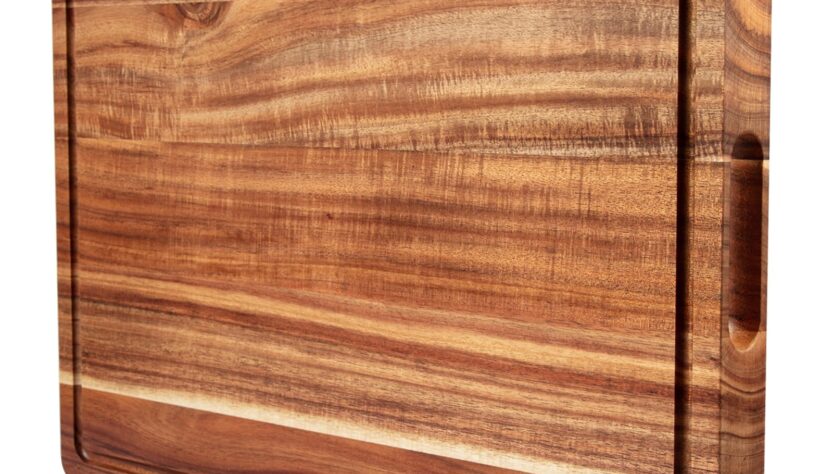
In the kitchens of the 1980s, a thick wooden butcher block/board often served as the centerpiece of food preparation. These substantial slabs of hardwood were workhorses, built to endure years of heavy use. Then they largely vanished, replaced by plastic cutting boards following a government recommendation that, it later turned out, rested on no scientific foundation.
In the early 1990s, food microbiologist Dean Cliver grew curious about the official push to abandon wood in favor of plastic. He contacted the USDA and requested the supporting evidence. Officials admitted they had none. Rather than accept the advice at face value, Cliver decided to test the materials himself.
He deliberately contaminated both wooden and plastic boards with common foodborne pathogens: E. coli, Salmonella, and Listeria. Within three minutes, 99.9 percent of the bacteria on the wood were no longer viable. The natural pores of the wood drew the microbes below the surface, where they could not survive. Plastic boards produced the opposite result. Left overnight at room temperature, the bacteria multiplied freely. Knife scars made the problem worse; each cut created a groove that shielded bacteria from cleaning, rendering the surface difficult to sanitize even after a dishwasher cycle.
The substantial thickness of traditional butcher blocks was functional, not merely aesthetic. These were typically end-grain constructions, with the wood fibers oriented vertically. A knife blade parted the fibers rather than severing them across the grain, allowing the surface to close and recover. That self-healing property required a thick slab; thinner pieces would simply crack and separate.
Cliver repeated the experiments across nine different hardwoods, from maple to walnut. The outcome remained consistent every time. Wood demonstrated a natural ability to limit bacterial survival that plastic could not match.
What America discarded was a surface that actively reduced contamination risk and was engineered for longevity. In its place came a material that could harbor and amplify pathogens overnight in the scars left by everyday use. The wooden butcher block had been both more hygienic and more durable—qualities that a science-free recommendation managed to obscure for years.