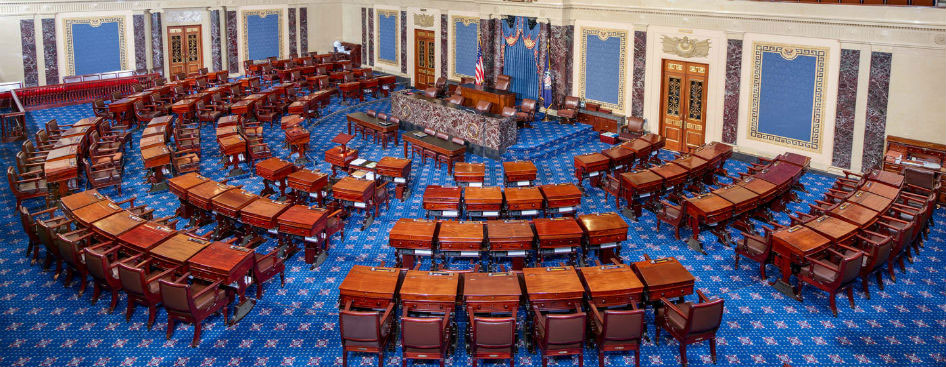
The Senate on Thursday rejected a resolution directing President Trump to withdraw U.S. forces from hostilities with Iran, 48-51, in the first congressional vote on the war since Democrats won both chambers in the Nov. 3 midterms.
Republicans Susan Collins of Maine, Lisa Murkowski of Alaska and Rand Paul of Kentucky voted with Democrats, Roll Call reported. Democrat John Fetterman of Pennsylvania voted with Republicans against it. Republicans Thom Tillis of North Carolina and Bill Cassidy of Louisiana, who have sometimes backed similar measures, voted no this time. The House passed the measure 220-204 in September. As a concurrent resolution it would not have gone to the President’s desk.
“We should finish the job, protect this nation and protect our allies,” Sen. Tim Sheehy, R-Mont., said, according to Stars and Stripes.
Trump: decision can wait until the new year
On Thursday this site reported Trump’s vow to “finish it off” in Iran without help from China or Russia. Speaking by phone to Israel’s Channel 12 aboard Air Force One on the way home from the Shenzhen summit with Xi Jinping and Vladimir Putin, he set no deadline. “I’m in no hurry to make any decision on Iran. We’ll see what happens after the start of the new year,” Trump said, according to Il Sole 24 Ore.
The New York Times reported this week that Trump is weighing new large-scale strikes based on fresh intelligence and pressure from Israel, and that he has not decided. Prime Minister Benjamin Netanyahu is pressing Washington to join a four-to-seven-day air campaign, according to people briefed on the talks, Il Sole reported.
Mossad chief Roman Gofman argued for joint U.S.-Israeli strikes during meetings last week with administration officials, including CIA Director John Ratcliffe, two people briefed on the visit told Reuters. Israeli media reported he also met envoy Steve Witkoff in Miami.
A White House official told Reuters that Trump believes economic pressure has been “devastating” to Iran, making “major combat operations” unnecessary, and that the President has every option available to make sure Iran never gets a nuclear weapon.
The cost so far
The war began Feb. 28 with joint U.S. and Israeli strikes. A ceasefire has formally held since April, though both sides have exchanged fire repeatedly, Reuters reported. The Pentagon lists 23 U.S. service members killed and more than 850 injured in connected operations, according to Stars and Stripes, and puts the cost at $48.3 billion as of Nov. 13, according to Il Sole.
What Democrats plan next
Democrats said they will turn to spending bills. Congress must pass a funding measure by Dec. 11 to avoid a shutdown, and Sens. Tammy Duckworth of Illinois and Kirsten Gillibrand of New York back an amendment barring money for offensive operations in Iran. “Nine months in, defunding the war is the only way to force Trump to end it,” Duckworth said, according to Roll Call. Sen. Tim Kaine of Virginia said more war powers votes are planned once Democrats hold the gavels in January.
The bottom line
Senate Republicans held the line on Thursday, and they were right to. A vote to order American forces out while Iran still holds 60 percent enriched uranium and keeps trading fire with American forces would have handed Tehran exactly what it has been demanding from mediators.
Trump is also right not to be rushed. Netanyahu wants a week of joint bombing on Israel’s timetable, and Democrats want to cut off funding on theirs. The President has kept the blockade and the economic squeeze in place, kept strikes on the table, and said he will decide when it suits American interests.
The Democrats’ defunding plan is the real danger. Cutting off money for operations after 23 Americans have given their lives and a large American force remains in the region would tie the hands of commanders in the middle of a war. Republicans should refuse to attach any such rider to the December funding bill.