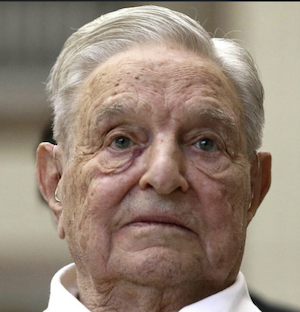
The Soros family isn’t just dabbling in politics anymore—they’re escalating into full-throttle funding of candidates and groups pushing radical left policies that undermine borders, law enforcement, and economic freedom. George Soros and his son Alex have already funneled over $100 million into the 2026 midterms through super PACs, on track to shatter previous records. Meanwhile, their Open Society Foundations network quietly pumps hundreds of millions more into progressive infrastructure that indirectly shapes races without the same disclosure rules. This isn’t neutral philanthropy—it’s a coordinated push for a more socialist America, and voters should see it for what it is.
Open Political Spending: Democracy PAC Leads the Charge
The family’s most visible vehicle is Democracy PAC, their flagship super PAC. Federal filings show roughly $102.8 million routed through it this cycle so far, with the bulk coming from George Soros-linked entities like his private corporation Geosor ($52 million) and the Fund for Policy Reform ($50 million, where Alex serves as a director). Only a tiny fraction—about $794,000—comes directly under George’s name.
This money flows to Democratic-aligned groups and candidates in federal and state races, especially battlegrounds. Past patterns and current filings point to heavy support for Senate Majority PAC, Black PAC, Planned Parenthood Votes, and similar outfits focused on mobilizing voters around criminal justice reform, expansive social programs, and opposition to enforcement priorities. With four months until Election Day, the family is positioned to exceed George’s 2022 midterm record of $128 million. This direct super PAC spending buys ads, ground operations, and candidate boosts in key districts.
🚨 Democrats laundered our tax money to George Soros so he could send it back as campaign donations
– Before leaving office Democrats sent $260 MILLION DOLLARS TO GEORGE SOROS
– Now George Soros has spent $103 million dollars during the 2026 midterms on Democrats.…— Pascal Najadi (USSF) (@imPascal_Najadi) July 1, 2026
Philanthropic Dark Money: Open Society Foundations and the Indirect Web
Beyond the super PAC, the Soros machine operates through the Open Society Foundations, which announced a $300 million U.S. initiative in 2026 for “economic security,” civil liberties, racial and economic justice, and countering “hate.” Grants go to national, state, and local organizations advancing equity-focused policies—think wealth redistribution vibes, criminal justice overhaul that weakens policing, and immigration stances that prioritize open borders over sovereignty.
These aren’t direct candidate checks, but the money builds infrastructure. Funded groups often align with or support progressive candidates through voter mobilization, research, and advocacy that echoes socialist priorities. The Fund for Policy Reform (tied to the network) channels cash into Democracy PAC, creating a seamless loop.
Indirect connections amplify the reach. The family has long backed the Democracy Alliance, a donor network coordinating progressive spending. Entities like the Sixteen Thirty Fund—a major 501(c)(4) dark money hub—have received support from Soros-linked sources or aligned networks in prior cycles. This fund spends tens of millions on ballot measures, issue advocacy, and indirect candidate help without naming donors publicly. It pushes policies on abortion, voting rules, and social spending that dovetail with the family’s worldview. Past donations from the network have flowed to groups backing candidates in states like Texas and elsewhere.
The result: Open spending gets the headlines and super PAC firepower, while the foundations and dark money arms provide the under-the-radar muscle—training activists, funding think tanks, and shaping narratives that favor left-leaning outcomes.
🤔They never talk about George’s wealth.
George Soros is worth ~$7.5B (Forbes, July 2026). His fortune came from hedge fund bets—like shorting the pound for ~$1B— now “destroying America” from the inside.
He’s funneled $32B+ into Open Society Foundations and $103M into 2026 Dem…— Sean SR. USA (@Identifythebox) July 2, 2026
Amounts Escalating for 2026 and the Likely Outcome
Compared to prior cycles, this is a clear ramp-up. The $103 million political total already tops what they spent by similar points in recent midterms, with the $300 million philanthropic push adding another layer of long-term influence. Expect more as Election Day approaches—Democracy PAC alone had tens of millions in the bank earlier in the cycle.
For the 2026 midterms, this firepower aims to protect Democratic holds and flip competitive seats, especially where socialist-leaning messaging on equity and justice resonates with base voters. It bolsters candidates aligned with expansive government roles in the economy and softer approaches to crime and immigration.
Realistically, the impact will be noticeable but limited in flipping majorities. Polling and structural factors favor Republican retention of the Senate and strong House positioning, driven by voter priorities on borders, economy, and security. Soros money can tighten races and energize progressive turnout in urban and coastal areas, but it often alienates moderates and working-class voters who see it as elite interference favoring failed policies. History shows heavy outside spending by one side rarely overcomes broad public sentiment against radical shifts.
The bigger danger isn’t one election—it’s the cumulative effect. This funding entrenches organizations and candidates wedded to bigger government, identity politics, and weakened enforcement. Americans benefit from transparent competition, not billionaire networks tilting the field toward imported ideologies that prioritize globalism over national strength. The Soros escalation underscores why voters must demand accountability and reject the slow creep toward a less free, less prosperous America.