How a Narrow Waterway Became a Financial Weapon
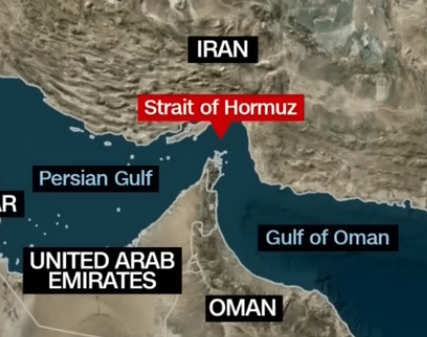
On February 3, 2026, Iranian gunboats and a drone closed in on the Stena Imperative, a U.S.-flagged tanker moving through the Strait of Hormuz. They ordered it to stop and prepare to be boarded. It didn’t. It sped up instead, and a U.S. Navy destroyer moved in to escort it out. No boarding happened. No cargo was touched. No shots were fired. And yet Brent crude still climbed that session, from $63.870 to $65.07, roughly 1.9 percent, in the time it took the tanker to outrun a boarding order it never actually had to fight off.
That’s the puzzle worth sitting with. Nothing was disrupted. Nothing was lost. So why did the price move at all?
The answer isn’t really about Iran, or gunboats, or even Hormuz specifically. It’s about how oil is priced in the first place, and why that architecture makes a credible threat almost as powerful as the real thing.
Where the Price Actually Comes From
Crude oil isn’t one product. There are over 160 traded grades, varying by density and sulfur content, and no single “oil price” means anything without specifying which barrel you’re talking about. Markets solve this the way real estate markets solve pricing in a city full of different houses: they pick a benchmark and price everything else relative to it. Brent, sourced from the North Sea, is that benchmark for most of the world, anchoring roughly 70 to 75 percent of globally traded crude. Sell a barrel of Saudi Arab Light or Iraqi Basra, and it’s priced as Brent plus or minus a differential, not on its own terms.
Here’s the part that actually matters for Hormuz: Brent’s price isn’t set at the wellhead or the loading dock. It’s set on futures exchanges in New York and London, often weeks before a tanker even leaves port. A futures contract lets a trader lock in tomorrow’s price today, and traders don’t wait for a disruption to materialize before acting. They price the probability of one. That’s the entire mechanism. A credible threat to a chokepoint doesn’t need to succeed in moving the market. It just needs to be credible.
There’s a second channel that compounds this. Tankers moving through contested waters carry war-risk insurance, and insurers reprice that coverage upward the moment tensions spike, regardless of whether anything actually happens. Higher insurance costs flow straight into landed fuel costs. Neither channel needs a single barrel to be delayed, damaged, or seized.
This Has Happened Before
Skeptics might reasonably ask whether the Stena Imperative episode was a one-off, a single data point dressed up as a pattern. It isn’t. Go back to May 12, 2019, when four commercial vessels were sabotaged near the port of Fujairah, just outside the strait. Nobody was killed. The strait never closed. Brent still rose nearly 2 percent, to $71.75, within a day.
A month later, on June 13, 2019, two tankers were attacked in the Gulf of Oman. Brent spiked as much as 4.5 percent intraday and settled roughly 2 percent higher. But the more revealing number came from the insurance market, not the futures market: war-risk premiums for supertankers making the Hormuz run jumped from around $50,000 to $185,000 almost overnight. Nothing about global oil supply had actually changed. The ships that were attacked represented a rounding error against 20 million barrels a day of daily flow. What changed was the market’s assessment of what might happen next time.
Three incidents, seven years apart, all point to the same mechanism: limited or nonexistent physical damage, and a price and insurance reaction wildly out of proportion to any barrel actually lost.
Why Iran Doesn’t Need to Close the Strait
The Strait of Hormuz carries roughly 20 million barrels a day, about a fifth of global consumption. Saudi Arabia, Iraq, and the UAE alone exported 13.1 million barrels a day through it in 2025. Existing pipeline alternatives can reroute only 4.2 million barrels a day, leaving some 16 million barrels a day with nowhere else to go if the strait actually shut.
Iran has understood this for decades without ever needing to act on it fully. During the Tanker War of the 1980s, sustained attacks on Gulf shipping eventually forced the United States into naval escort duty at enormous daily cost. By 2026, the approach had gotten more efficient, not less. Iran doesn’t need to sustain a campaign or seize a single ship. A fast boat, a drone, and the willingness to order a boarding it doesn’t have to actually complete is enough to move futures traders, because the pricing architecture converts probability directly into price. The strait doesn’t need to close. It only needs to look like it might.
This is asymmetric coercion at its most efficient. Iran’s navy is no match for the U.S. Fifth Fleet, and a direct confrontation would be catastrophic for Tehran. But the credible threat of disruption imposes costs on the global economy that are wildly disproportionate to what Iran actually spends generating that threat. The operational cost is minimal. The economic effect is immediate and global.
What This Means for Military Planners
Carrier presence, naval escorts, and freedom-of-navigation patrols exist to deter or defeat physical interdiction. That’s the physical channel, and it’s the one American deterrence has been built around for forty years. It does comparatively little for the financial transmission channel: the mechanism through which a credible, non-kinetic threat moves global oil prices through futures markets, whether or not a single barrel is ever actually at risk.
A defense posture calibrated only to prevent closure of the strait can leave that second channel almost entirely untouched, because it reacts to probability, not confirmed outcomes. Forces built to respond to physical disruption can succeed completely at deterring the disruption while doing nothing about the economic coercion the mere threat of it already achieved.
This isn’t an argument against naval presence. Credible deterrence lowers the odds that a serious threat signal ever gets generated, and that lowers the risk premium baked into futures prices before the fact. But the financial channel deserves the same explicit attention as the physical one when planners assess chokepoint vulnerability. Rapid de-escalatory diplomacy, coordinated messaging about reserve deployments, and visible supply-side resilience may matter as much as another carrier group in managing the economic dimension of the threat.
The Strait of Hormuz doesn’t need to close to be weaponized. It only needs to look like it might. As long as global oil pricing stays anchored to a futures-based benchmark system, that instrument remains available, at very low cost, to whoever decides to use it next.
Harshit Singh is an Honors Research student of Management Studies at Shaheed Sukhdev College of Business Studies, University of Delhi.
image: Smoke billows from the Mayuree Naree, a Thailand-flagged bulk carrier, after it was hit by a projectile in the Strait of Hormuz, north of Oman, on March 11, 2026. (Noppadon Wongsuvan via AP) CORRECTION: Corrects photographer name from Panithi Tumkaew to Noppadon Wongsuvan)
This article was originally published by RealClearDefense and made available via RealClearWire.
