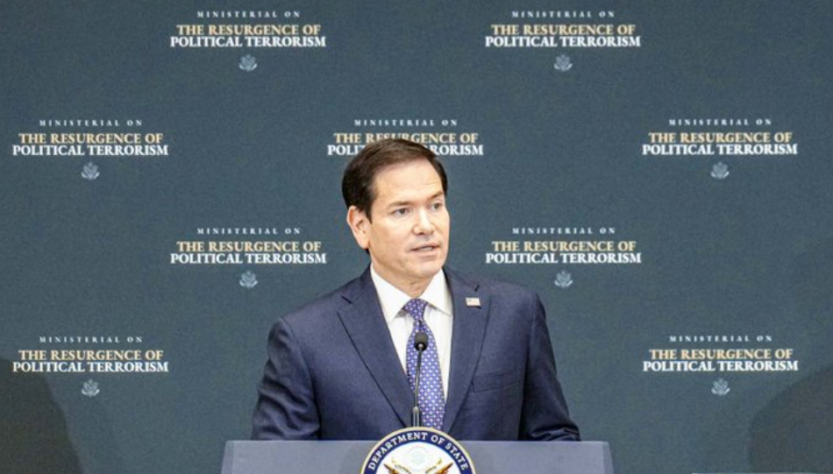
Secretary of State Marco Rubio made it unmistakably clear that after decades of focusing on jihadist threats, the United States now sees transnational far-left political terrorism as the rising, under-addressed danger. He positioned it as a “new wave of this old evil” — ideologically driven violence that hates Western civilization itself and uses assassinations, infrastructure attacks, and organized disruption to achieve political ends.
The speech shifts U.S. counterterrorism policy and diplomacy toward treating far-left networks (including Antifa-linked groups) with the same seriousness once reserved for al-Qaeda-style threats, complete with new designations, international cooperation, and intelligence mapping.
U.S. Secretary of State Marco Rubio Hosts Global Ministerial on Resurgence of Political Terrorism, Urges Focus on Far-Left Threat. Washington, D.C. – July 16, 2026
Secretary of State Marco Rubio delivered opening remarks today at the U.S. Ministerial on the Resurgence of Political Terrorism at the State Department, convening representatives from more than 60 countries to address what the administration describes as a growing transnational threat from far-left extremism.
In his address, Rubio emphasized that protecting citizens is a core governmental duty transcending politics. He highlighted a post-9/11 shift in counterterrorism priorities that effectively diminished Islamist militancy through international cooperation, but created a “blind spot” regarding rising left-wing political violence. “Even today, the very idea that far-left terrorism could be a serious threat is treated as a right-wing fever dream, or worse, as a dangerous fascist conspiracy,” he stated.
Rubio pointed to specific incidents as evidence of this resurgence, including the assassination of conservative activist Charlie Kirk, the killing of the UnitedHealthcare CEO, the 2025 Minnesota Catholic school shooting, and attacks on immigration officers. He described far-left terrorism as “a distinctive and unique evil” driven by “a hatred, above all else, for civilization itself” — a “revolt of the worst against the best, a revolt of the weak and the cowardly, against the strong and the good.”
The Secretary criticized how some in positions of power have dismissed left-wing violence as legitimate political expression when aligned with certain causes. He cited examples like the widespread property damage, looting, and violence during 2020 demonstrations following the death of George Floyd, which he argued were downplayed by media, think tanks, and officials who sympathized with the underlying goals. Rubio also alleged ties between leftist militant groups and hostile foreign states, such as Iranian proxy networks and Cuban influence, though specific evidence was not detailed in initial reports.
Key Themes and Proposals
- International Cooperation: Rubio called for rebuilding global counterterrorism architecture to map and defeat these networks, stressing that terrorists exploit gaps between borders. The U.S. aims to strengthen intelligence sharing, law enforcement collaboration, and strategies targeting financing and tactics.
- Designations and Actions: Since November, the U.S. has designated several European anarchist groups (including Antifa Ost, Informal Anarchist Federation/International Revolutionary Front, and others) as Foreign Terrorist Organizations, with rewards for information on their financing.
- Broader Context: The ministerial includes panel discussions on critical infrastructure vulnerabilities, emerging tactics, and risks to the private sector. Treasury Secretary Scott Bessent addressed expanding probes into nonprofits potentially masking foreign influence.
The event has drawn criticism from Democrats and some allies, who worry it politicizes counterterrorism, diverts resources from other threats like far-right extremism or remaining jihadist risks, and could chill lawful protest. Eleven Democratic lawmakers urged a return to “data-driven” priorities in a letter to Rubio.
Rubio framed the initiative as non-partisan national security: “We will either cooperate across our borders, or the terrorists will continue to exploit the gaps between them.” He announced plans for further workshops, including one co-hosted with Germany.
Group Photo and Setting
The conference featured a formal group photo of international delegates and a professional backdrop for Rubio’s podium remarks.
This ministerial represents a significant Trump administration priority to internationalize efforts against what it views as under-addressed far-left political terrorism, aiming to close perceived gaps in global defenses while rebuilding alliances around this redefined threat. Official transcripts and further details are expected from the State Department shortly.