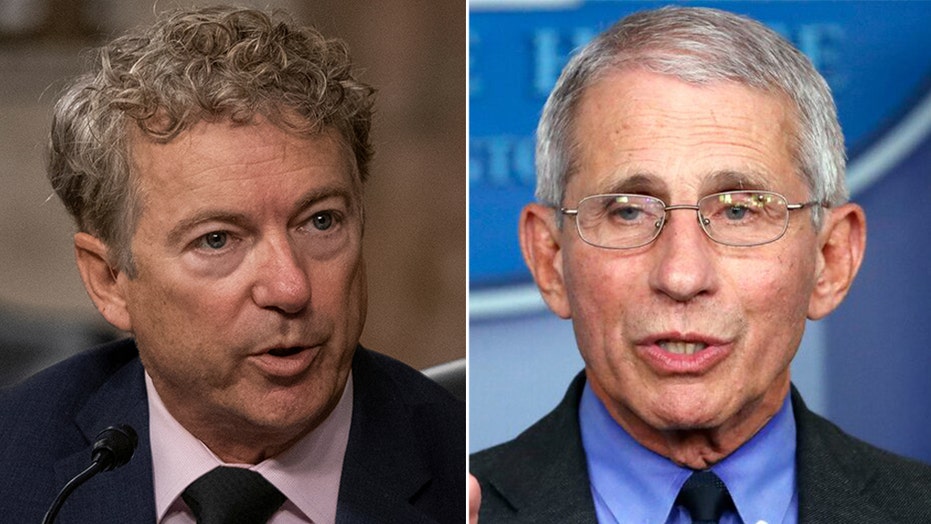
Senator Rand Paul has released more than a thousand pages of Anthony Fauci’s private diary entries covering the critical early years of the COVID pandemic. The gap between what Fauci wrote privately and what he told the public, Congress, and the media is not subtle. It is systematic. He managed a narrative while knowing key facts pointed in different directions. Here are ten specific examples drawn from the diaries and the public record they contradict.
These diary entries just confirm what the “far right” has said for years.
Dr. Fauci is one of the most vain people I’ve ever seen.
He lied repeatedly about the virus’s lethality and origin.
He strong armed mayors and governors to lock down their economies.
Horrible man. https://t.co/pBG02ZIYY9
— Nick Lindquist (@nick_lindquist) July 27, 2026
- Lab-leak vs. wet market In late January 2020, Fauci privately noted that the first infection was not connected to the Wuhan market and that the market was an “amplifier,” not the source. Publicly, for months afterward, he promoted the natural spillover-from-animals narrative and treated the lab-leak hypothesis as a fringe idea.
- Early scientific doubt on natural origin On a February 1, 2020, call with leading virologists, roughly half expressed the view that the virus looked constructed, citing the furin cleavage site and prior gain-of-function work. Fauci recorded the disagreement. Publicly he projected high confidence that the science pointed to a natural origin.
- Gain-of-function research at Wuhan Privately, Fauci referred to Shi Zhengli’s long-running gain-of-function work adapting coronavirus spike proteins to human ACE2 receptors. Under oath he repeatedly insisted NIH had not funded gain-of-function research at the Wuhan Institute of Virology, relying on narrow definitional games.
- School closures In March 2020 diary entries, Fauci recorded personally convincing New York Mayor Bill de Blasio and California officials to close schools, bars, and restaurants based on his public statements and private calls. Later he claimed he never shut down schools and tried to distance himself from the policy’s costs.
- Masking Early private communications and notes showed uncertainty about the effectiveness of general-population masking. Publicly he shifted from telling the public not to wear masks (to preserve supply for health workers) to strongly endorsing universal masking, including for children, with little supporting evidence for the latter.
- Relationship with David Morens Fauci told Congress he had no knowledge of a secret back-channel used by senior adviser David Morens to evade FOIA. Diary entries show him arranging calls with Morens specifically to discuss the growing scrutiny over Wuhan funding and EcoHealth.
- Dismissing lab-leak proponents Privately in 2021 he referred to prominent lab-leak advocates in contemptuous terms and wrote that there was “absolutely no evidence whatsoever” of a lab leak. Publicly he claimed he had always kept an open mind.
- Six-foot distancing and mitigation severity Diary notes show him pushing aggressive mitigation, including the 15-day guidance that became prolonged lockdowns. He later distanced himself from the most damaging aspects while the diaries record his active role in escalating them.
- Vaccine certainty and natural immunity Private notes and communications reflected more nuance on vaccine durability and the role of prior infection. Public messaging treated vaccination as the overwhelmingly dominant path and downplayed natural immunity for an extended period.
- Self-awareness of political targeting Diary entries show Fauci framing legitimate questions from members of Congress about Wuhan funding and origins as a right-wing conspiracy to “bring me down.” He treated oversight itself as illegitimate while presenting himself publicly as a pure scientist above politics.
🚨 FAUCI PULLED THE WOOL OVER AMERICA’S EYES.
Brit Hume just dropped the hammer on the Fauci diaries:
“Fauci didn’t really believe the stuff that he was saying in terms of the origin of the disease.”
He denied over and over that he pushed the shutdowns.
The documents prove he… pic.twitter.com/pIJtJtxBdX— CONSTITUTION X 🇺🇸 (@ConstitustionX) July 28, 2026
These are not differences of emphasis. They are cases in which the private record shows knowledge or belief that contradicted the confident public line. The diaries confirm what many suspected in real time: Fauci was managing a narrative, protecting institutional equities, and shaping policy far beyond what the evidence available to him at the time justified. Americans were told to trust the science. What they received was selective science filtered through bureaucracy and self-protection. The diaries make that plain.