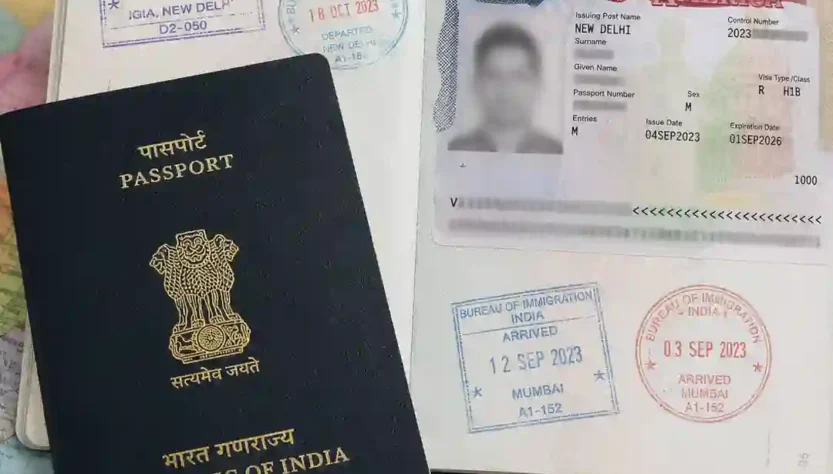
A recruiter emailed out a TCS Citrix job in Burlington, Massachusetts. Long-term onsite contract, 10-plus years experience. Smack in the middle: “Need H-1B.”
Americans need not apply. The post was already aimed at visa holders.
Harmeet Dhillon at the Justice Department’s Civil Rights Division saw it and said she’ll review.
Will review. https://t.co/DeJQzWY3mr
— AAGHarmeetDhillon (@AAGDhillon) August 25, 2026
This is how a lot of IT contract work gets filled. Big Indian outsourcing firms and the recruiters who feed them pass jobs around private channels that target people already on H-1B visas. Most of those visa holders come from the Indian subcontinent. Official numbers show about 70 percent of all H-1B approvals go to people born in India. China is a distant second at around 12 percent.
TCS alone got roughly 5,500 H-1B approvals in fiscal 2025. Over the years the company has sponsored tens of thousands. At one point it had about 11,000 H-1B workers in a U.S. workforce of 32,000–33,000. Other Indian IT firms have run the same model. The result is a pipeline that heavily favors workers from one region of the world while American applicants—especially older ones—get filtered out or never see the opening.
It doesn’t stop with the worker.
Spouses and kids come over on H-4 dependent visas. Eligible spouses can also get work authorization, so the household often puts two people into the U.S. labor market.
H-1B is supposed to cover real shortages of specialized skills. In practice it often delivers a more controllable workforce whose legal status is tied to the employer. Pay pressure stays low. Americans keep hearing there’s a talent shortage while the ads quietly say “Need H1b.”
EEOC has already looked at claims that companies like TCS favored South Asian H-1B workers and pushed out non-South Asian Americans. Other staffing firms have posted ads that bluntly exclude U.S. citizens and green-card holders. Federal law generally bans that kind of citizenship discrimination.
One email doesn’t prove every job works this way. But the numbers and the pattern do. Roughly seven out of ten H-1B slots go to Indian-born workers, and their dependents can join them with visas and, in many cases, working rights. When recruiters write “Need H-1B” on a U.S. job, American workers already know who the job is really for.