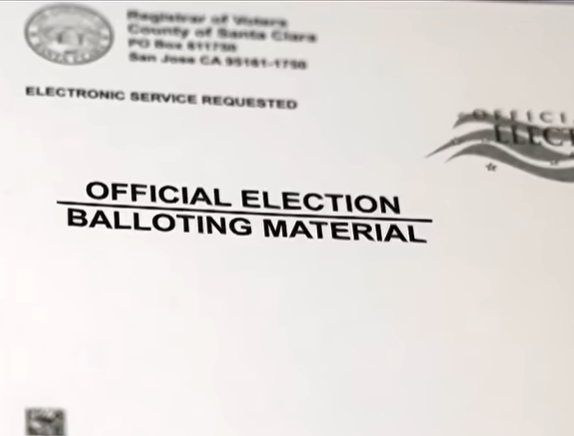
The Supreme Court on Monday stayed a lower-court injunction that had blocked President Trump’s executive order on mail-in voting. The unsigned order lets the administration move forward with implementation while the underlying legal fight continues in the lower courts. It does not decide whether every piece of the order is lawful. It does decide that the challenge brought by two dozen states was not ripe enough to freeze federal action this close to the midterms.
The executive order, issued earlier this year, directs three concrete steps. The Department of Homeland Security is to compile state-by-state citizenship lists. The Justice Department is to prioritize prosecution of officials who issue federal ballots to people who are not eligible. The Postal Service is to begin rulemaking that would require trackable envelopes and limit delivery of mail ballots to voters who appear on verified lists. The goal is straightforward: stop ballots from going to non-citizens and create a verifiable chain of custody for the ones that are mailed.
The Supreme Court ruling that lets the Trump Administration proceed with mail ballot security measures has Democrats freaking out, but what’s really driving them bonkers is less about providing voter lists for eligibility determination (though they are certainly worried about…
— Mark Mendlovitz (@MendlovitzMark) August 25, 2026
What the Court Actually Said
A majority of the justices accepted the administration’s argument that the order is largely an internal directive to executive-branch agencies. Until those agencies finalize the rules and begin applying them, the states have not suffered the concrete, imminent injury required for a pre-enforcement lawsuit to stop the process cold. The Court therefore lifted the injunction so the government can continue planning and rulemaking. Three justices dissented, arguing the risk of disruption justified keeping the freeze in place. The majority declined to turn a preliminary procedural question into a full-scale rewrite of election administration two months before voting begins.
This is distinct from the Court’s June decision on late-arriving ballots. In that 5-4 ruling the justices held that federal law does not prohibit states from counting mail ballots postmarked by Election Day even if they arrive afterward. That case left state grace periods intact. The current order addresses a different problem: who is eligible to receive a mail ballot in the first place and whether the system can track it.
President Trump just scored a major Supreme Court victory on mail-in voting ahead of the midterms.
In a 6-3 decision, the justices are allowing the administration to move forward, at least for now, with key parts of Trump’s March executive order after they were blocked by a… pic.twitter.com/BSYCNdH2ci
— Fox News (@FoxNews) August 25, 2026
Impact on the 2026 Elections
The practical effect for November depends on speed. Agencies now have a green light to build the citizenship lists and draft the Postal Service rules. If those steps are completed and implemented before early voting and mail ballot distribution begin in many states, two changes become possible. First, mail ballots would be restricted more tightly to verified citizens. Second, every mailed ballot would carry tracking information that makes chain-of-custody failures harder to hide.
🇺🇸 HUGE MASSIVE WIN! – Remember the SAVE America Act? The bill to make sure only citizens vote that the Senate let die?
Trump just went and did a big piece of it anyway!
The Supreme Court cleared his mail-ballot order 6-3. Ballots go only to verified voters now, with barcodes… pic.twitter.com/ht5a8hi66y
— Bill Mitchell (@mitchellvii) August 24, 2026
States that rely heavily on mail voting will face pressure to align their procedures or risk ballots being rejected or delayed. Election officials who have treated citizenship verification as optional will have to adjust. The political impact is obvious: any reduction in unsecured or unverified mail ballots removes a vector that has fueled repeated disputes over late counts and unexplained shifts. Voters who show up in person or use early in-person voting are unaffected. The rules target the weakest link in the current system.
Litigation will continue. The lower courts still have to decide the ultimate legality of the order. But the Supreme Court refused to let a preliminary injunction dictate the entire midterm calendar. That refusal matters. Election integrity is not a theoretical exercise. When the federal government asserts authority to ensure that only eligible citizens receive federal ballots and that those ballots can be tracked, the default should not be a judicial freeze that preserves the status quo until after the votes are cast. The Court just rejected that default. The administration can now act. The 2026 elections will show whether the new rules arrive in time to matter.