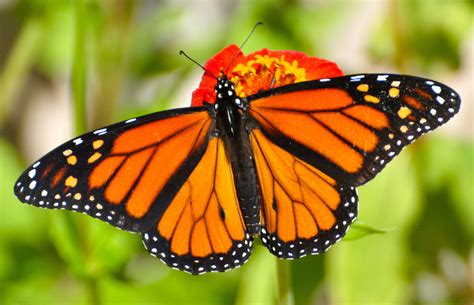
If you live in the South, keep an eye on your flower beds this month. One of nature’s great road trips is passing through.
Eastern monarch butterflies are in the middle of their fall migration to the mountains of central Mexico. And after years of worrying headlines, there’s some good news: last winter, the monarchs bounced back.
A 64% comeback
Each winter, scientists measure how much forest the monarchs cover in their Mexican roosting grounds. In December 2025, the butterflies occupied 2.93 hectares, or about 7.24 acres, according to the Monarch Larva Monitoring Project. That’s a 64% increase over the year before, and slightly above the 10-year average of 2.81 hectares.
The survey was done by Mexico’s National Commission of Natural Protected Areas and World Wildlife Fund-Mexico. Researchers caution that one strong year doesn’t solve everything. Scientists would like to see the population hover around 6 hectares to stay healthy over the long run, the monitoring project noted. But after a long decline from about 2003 to 2014, the numbers have been holding steady.
Where the monarchs are right now
According to the Farmers’ Almanac migration guide, the timing works roughly like this:
- Late September to early October: Southern Plains and the upper South
- October: the Deep South
- Late October into November: arrival in central Mexico
Eastern monarchs fly more than 2,000 miles, and some from the far north cover nearly 3,000 miles. They usually travel 70 to 75 miles a day, the Almanac says, stopping to refuel wherever they find nectar-rich flowers.
The “super generation”
Here’s the amazing part. Most monarchs live only two to six weeks as adults. But the butterflies that make the fall trip are a special “super generation” that puts off breeding and lives for months.
They fly south, spend the winter clustered in fir forests 8,000 to nearly 12,000 feet up in the Mexican mountains, and then start the trip north in spring. None of them has ever made the journey before. Scientists believe they navigate with a sun compass tied to their internal clock, with Earth’s magnetic field as a backup. How they know where to go remains a mystery.
What about the federal listing?
The U.S. Fish and Wildlife Service proposed listing the monarch as a threatened species in December 2024, according to Monarch Watch. The agency missed its one-year deadline to decide. On September 30, under a settlement with environmental groups that had sued, the agency agreed to make a final decision by June 6, 2030, according to a release from the Center for Biological Diversity.
In the meantime, last winter’s rebound happened without new federal mandates. Monarch Watch notes the proposed rule itself stressed encouraging voluntary efforts, and that is exactly where ordinary landowners and gardeners can make a difference.
How your backyard can help
You don’t need a permit, a grant or a government program to help monarchs. A few simple steps go a long way:
- Plant late bloomers. The Almanac recommends goldenrod, New England asters, Joe-Pye weed, blazing star, coneflowers, zinnias, cosmos and sunflowers to fuel migrating butterflies.
- Plant native milkweed. It’s the only food monarch caterpillars eat, so it’s essential for the spring and summer generations.
- Go easy on pesticides. Cut back on spraying, especially on flowers that are in bloom.
- Leave a wild patch. A corner of native wildflowers can serve as a rest stop.
- Join in. Citizen-science programs like Monarch Watch tag butterflies to track the migration, and anyone can take part.
Fall is also a good time to collect seeds from your own milkweed and wildflowers to plant next year, which saves money and spreads local plants.
The bottom line
The monarch’s rebound is a reminder that conservation doesn’t always have to start in Washington. Millions of Americans planting milkweed, letting a few wildflowers grow and easing up on the sprayer can add up to real results for one of the most amazing migrations on Earth.
So this October, step outside, look for the orange and black wings, and know that your garden might be a refueling stop on a 2,000-mile journey.
Sources
- Monarch Larva Monitoring Project – Monarch population update, March 2026
- Farmers’ Almanac – Monarch butterfly migration 2026: when and where to see it
- Monarch Watch – Monarch listing decision
- Center for Biological Diversity – Endangered Species Act protection for monarch butterfly delayed until 2030