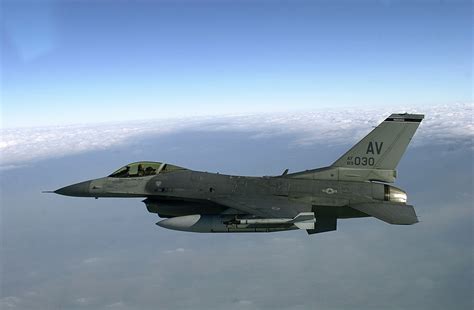
Two brand-new American fighter jets touched down in Taiwan on Friday, October 2, and they carry a message for Beijing. They also carry a warning for Washington about how slowly America is building the weapons its friends are paying for.
The two F-16 Block 70 fighters landed at Chihhang Air Base in Taitung County on Taiwan’s east coast, Taiwan News reported. They are the first of 66 jets Taiwan ordered from the United States.
A big order, paid for by Taiwan
The deal is worth NT$247.22 billion, or about US$7.75 billion, according to Taiwan News. Congress was notified of the 66-plane sale in August 2019, The Epoch Times reported.
The jets are built by Lockheed Martin in Greenville, South Carolina, according to the aviation site MigFlug. That means Taiwan’s defense dollars are going to American workers on an American assembly line.
The order includes 56 single-seat F-16Cs and 10 two-seat F-16Ds. The Block 70 is the newest version of the F-16. It comes with a modern AESA radar, upgraded avionics and conformal fuel tanks that add range without taking up weapons stations. MigFlug reported that Taiwan’s weapons package includes AIM-9X and AIM-120 air-to-air missiles, AGM-154C glide bombs and Harpoon anti-ship missiles.
Once all the new jets arrive, Taiwan will fly more than 200 F-16s, counting 139 older jets that have been upgraded to the F-16V standard.
Three years late
The good news comes with an asterisk. The first deliveries were originally expected in 2023, and a rollout was later scheduled for the third quarter of 2024. The jets arrived about three years behind the original plan, MigFlug reported.
The Epoch Times said delays were blamed on “supplier delivery delays and adjustments to the U.S. assembly schedule.” MigFlug pointed to the relocation and restart of the F-16 production line, supply-chain trouble and software problems.
Even the final leg of the trip dragged on. The two jets left South Carolina on August 17 and then spent about six weeks in Hawaii before flying on to Guam and Taiwan. Su Tzu-yun of Taiwan’s Institute for National Defense and Security Research said “storms around Hawaii came first,” with tanker availability, politics or technical issues as other possible factors, according to MigFlug. The jets also arrived without their electronic warfare suites, which are still being tested at Edwards Air Force Base in California.
What comes next
Taiwan’s Defense Minister Wellington Koo said more aircraft will arrive “before the end of the year,” according to Taiwan News. MigFlug reported that 63 more jets are on the production line, with the remaining deliveries planned for 2027 and 2028.
Koo was blunt about why the jets matter. “China’s intention to annex Taiwan by force has never changed,” he said, as quoted by MigFlug.
Hardware is only part of the challenge. Kimi Chi, a local observer who watched the arrival, said what Taiwan is “lacking the most right now is pilots,” according to MigFlug. Taiwan stood up the 7th Tactical Fighter Wing in December 2023 to fly the new jets and has sent pilots and ground crews to the United States for training, Taiwan News reported.
The bottom line
This is what peace through strength looks like. Taiwan is not asking American taxpayers to defend it for free. It is spending billions of its own dollars on American-made jets, built by American workers, to make an invasion too costly for China to try. That’s the kind of partnership America should want: allies who carry their own weight.
But a three-year delay on a 2019 order should alarm everyone in Washington. If America’s defense industry can’t deliver fighter jets that a paying customer ordered years ago, how will it keep up in a real crisis? Supply chains, slow production lines and red tape are a national security problem, not just a business problem.
The first two jets are on the ground. The Pentagon and Congress should make sure the other 64 don’t take another three years.