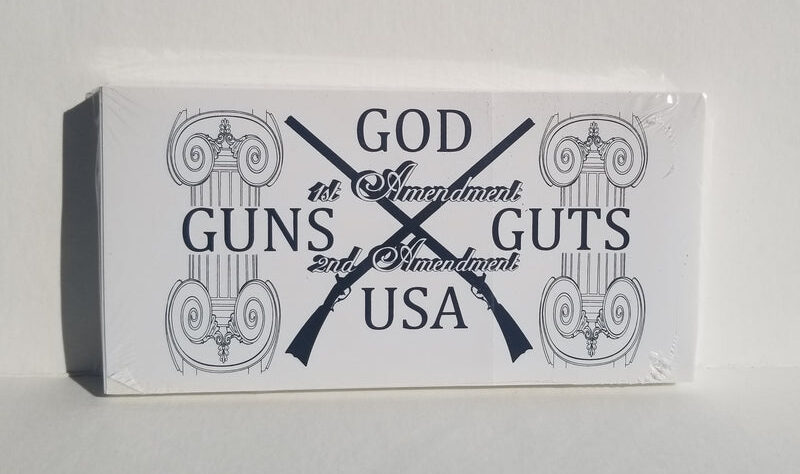
A North Carolina Republican wants to make sure the government can’t track you because of the sticker on your bumper.
Rep. Pat Harrigan introduced a bill Thursday that would rein in automated license plate readers, the roadside cameras now common in towns across America. Many are made by Flock Safety. The bill would bar police from searching camera records for political or religious messages on vehicles and would require a warrant for most searches, Fox News reported.
“When you consider that these systems track everything that you do, where you work, where your kids go to school,” Harrigan said, the data adds up to “an extraordinary amount of information about somebody that the government has that has never committed a crime.”
What the cameras can see
License plate readers photograph passing cars and log the plate, the location and other details about the vehicle. Police can later search that record by place or by a description of the car.
Flock’s systems go further than a plate. The company says its cameras can detect bumper stickers, though not identify what type they are. Its AI-powered “FreeForm” search lets users look up vehicle features “in plain terms,” according to Fox News. Flock says it has safeguards meant to block searches based on political or religious stickers and symbols. The company did not respond to Fox News Digital’s request for comment.
The catch: those safeguards are company policy, not law. A policy can change. A statute is harder to ignore.
What the bill would do
According to Fox News, Harrigan’s bill would:
- Ban searches aimed at political or religious messages on cars.
- Forbid agencies from sorting vehicles by “expressive attributes” such as bumper stickers, flags or decals.
- Require a probable-cause warrant for most searches, with exceptions for immediate threats to life or safety.
- Bar searches for civil immigration violations, parking tickets, debts and other civil penalties.
- Require records to be deleted within 24 hours unless tied to a warrant, emergency or court order.
- Stop vendors from selling or sharing location data, or using it to train AI models.
- Require search logs, annual public reports and audits.
The bill has teeth. States without qualifying protections would lose 10% of certain federal criminal justice grants. People whose data was searched illegally could sue for at least $1,000 per violation, and illegally obtained evidence would be kept out of court.
Why it matters
Abuse is not hypothetical. A Washington Post review published in August found at least 50 officers accused or charged with misusing license plate readers, and Flock’s system was involved in 46 of those cases, Fox News reported. Some officers allegedly used the cameras to track romantic partners, exes and other women.
States are taking notice too. Texas Gov. Greg Abbott ordered a halt to state funding for Flock cameras in September, Hoodline reported, citing the Houston Chronicle.
The data “have nothing to do with whether you committed a crime or not,” Harrigan said. He said his bill “strike[s] the right balance” between public safety and constitutional rights.
A crowded field
Harrigan is not alone. Sen. Josh Hawley, R-Mo., has offered the Stop Flock Abuse Act, which would require a paper trail for police searches and the deletion of driver data after 10 days unless it is tied to an active investigation, according to Hoodline. Rep. Thomas Massie’s Flock-Off Act would block localities from buying or running the cameras at all.
Sen. Bernie Sanders and Rep. Alexandria Ocasio-Cortez have pitched their own “Ban Flock Act.” Their version would bar federal agencies from using the readers outright.
President Trump said in September that he “sort of” likes Flock cameras, even as some call them “an infringement,” Fox News reported.
The bottom line
Conservatives have long warned that surveillance tools built for one purpose end up used for another. A camera installed to catch car thieves can become a database of where every law-abiding driver goes, and who among them has a pro-life sticker or a “Don’t Tread on Me” flag.
Harrigan’s bill doesn’t take cameras away from police. It keeps them pointed at crime instead of at citizens. Warrants, quick deletion and real penalties for abuse are the same protections the Fourth Amendment has always demanded.
Your truck is not a suspect because of what’s on the tailgate. Congress should write that into law.