Deer season is opening across much of the country, and for a lot of hunters that means a freezer full of venison and a dehydrator running on the kitchen counter. Jerky is one of the oldest ways to preserve meat, but drying alone does not make it safe.
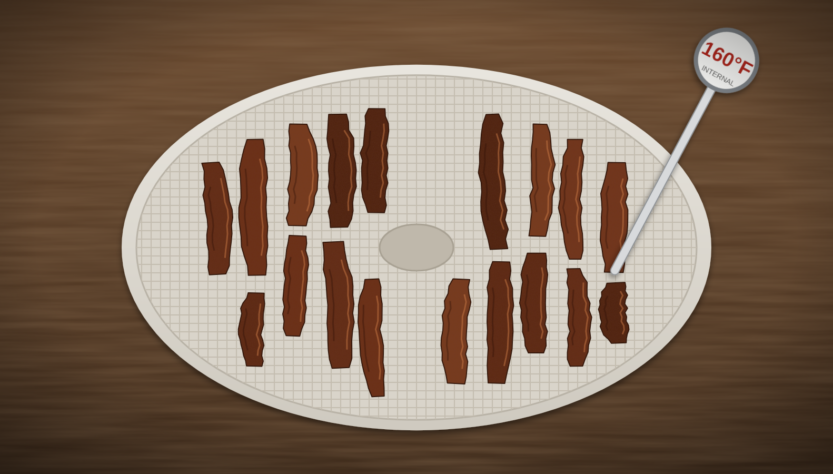
The National Center for Home Food Preservation at the University of Georgia says the meat has to reach an internal temperature of 160°F at some point in the process. That is well above the 140°F used for drying, which is why the center calls for a separate heating step.
Here is how to do it the tested way.
Step 1: Deal with the parasite first
Wild game and pork can carry Trichinella, a parasite. NCHFP says venison should be treated before it is sliced and marinated: “freeze a portion that is 6 inches or less thick at 0ºF or below for at least 30 days.”
Freezing handles the parasite, not bacteria. “Freezing will not eliminate bacteria from the meat,” the center warns. That is what the heating step is for.
A deer carcass should be chilled quickly after the kill. If gut contents touched the meat during field dressing, NCHFP says to skip jerky and use that meat only in dishes that will be thoroughly cooked.
Step 2: Slice and marinate
Partially freeze the meat so it slices cleanly, then cut strips no thicker than ¼ inch. Trim off all fat, which turns rancid quickly. Slice with the grain for chewy jerky or across it for a more tender, brittle strip.
NCHFP’s basic marinade for 1½ to 2 pounds of lean venison or beef is ¼ cup soy sauce, 1 tablespoon Worcestershire sauce, ¼ teaspoon each of black pepper and garlic powder, ½ teaspoon onion powder and 1 teaspoon hickory smoke-flavored salt. Marinate in the refrigerator for one to two hours or overnight. Don’t reuse the marinade.
Step 3: Get it to 160°F
There are two tested ways.
- Before drying: Bring the strips and marinade to a boil and boil for 5 minutes, then drain. Check several strips with a metal stem thermometer to confirm 160°F. Strips thicker than ¼ inch may need longer.
- After drying: Put the dried strips in an oven preheated to 275°F for 10 minutes. Thicker strips may need more time.
Step 4: Dry it
Dry the strips in a dehydrator or oven preheated to 140°F. Unheated strips take 10 to 24 hours. Strips boiled in marinade dry faster, so start checking after 3 hours.
The jerky is done when a test piece “cracks but does not break when it is bent.” Pat off any beads of oil.
Step 5: Store it
Pack jerky in glass jars, heavy plastic food bags or vacuum bags. Properly dried jerky keeps about two weeks at room temperature in a sealed container. For longer storage, NCHFP recommends the refrigerator or freezer.
The bottom line
A good jerky recipe takes a little patience: a month in the freezer, a few hours in the marinade and a day on the dehydrator. The one step that makes it safe takes only five minutes on the stove or ten in the oven, and it lets you turn this fall’s deer into snacks you can trust all winter.