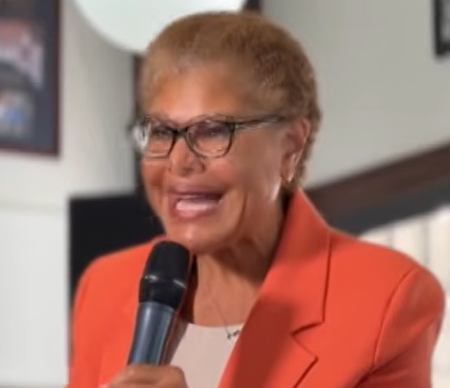
And Karen Bass Blaming Trump Is Pure Political Cowardice
Los Angeles has a homelessness crisis that has festered for years under progressive Democratic control. Tents line sidewalks. Open drug use and untreated mental illness are everyday sights. Taxpayers have poured billions into the problem with little lasting result. Now Mayor Karen Bass is pointing the finger at President Trump. That claim does not survive contact with reality. The numbers, the history, and the policy failures all point in a different direction. Fixing this requires confronting addiction, mental illness, and the failed ideology that treats street living as a civil right.
LA Mayor Karen Bass Blames Trump When Confronted on Growing Homeless Problem https://t.co/DHdB1GwSUS
— Marlon East Of The Pecos (@Darksideleader2) July 24, 2026
The Scale of the Problem
Los Angeles County and the City of Los Angeles still rank among the worst in the nation for both total homeless population and unsheltered street homelessness. Recent counts show the problem remains stubborn. After modest declines in prior years, the latest data indicate an uptick in the city, with street homelessness rising again. Billions have been spent. Programs such as Inside Safe have moved thousands indoors temporarily. Yet the streets remain filled, and the cycle of relapse and return continues. Housing costs are sky-high. Treatment capacity is inadequate. Enforcement against open camping and drug markets has been inconsistent at best.
Bass’s Blame Game Does Not Hold Up
Bass attributes the latest rise to federal policy changes, suspended funding, higher costs for gas and groceries, and related pressures under the Trump administration. This is selective memory. The modern explosion in LA homelessness accelerated under previous Democratic governors and mayors long before Trump returned to office. California’s housing regulations, high taxes, soft-on-crime policies, and “Housing First” dogma that prioritizes permanent housing without requiring sobriety or treatment created the conditions. Local agencies have faced repeated audits over poor tracking of hundreds of millions in spending. Federal funding fluctuations matter, but they do not explain a multi-decade failure concentrated in deep-blue cities that reject the very approaches that reduce street homelessness elsewhere.
SHOCKER…the LA homeless count is going UP!
I warned you guys: the more homeless people, the more money Nithya Raman and Karen Bass can launder through their corrupt NGOs. You will NEVER fix this problem by electing people who profit off it.
pic.twitter.com/8rTNrOcrRG— Spencer Pratt (@spencerpratt) July 23, 2026
Trump’s policies emphasize accountability, treatment, and ending the open-air drug and tent culture. Suspending funds to ineffective or opaque agencies is not the cause of the crisis. It is a response to it. Bass’s record shows the limits of the progressive model: more money, more temporary placements, and continued tolerance of disorder. Blaming the White House is easier than admitting the local approach has failed.
Root Causes That Actually Matter
The dominant drivers in Los Angeles are untreated severe mental illness, addiction (especially fentanyl and meth), and a policy regime that makes it difficult to compel treatment or clear encampments. High housing costs and zoning restrictions limit supply, but most people living on the street are not simply one affordable unit away from stability. They need sustained intervention. “Housing First” without requirements has produced expensive permanent supportive housing that often fails to address the underlying pathology. Soft enforcement invites more camping. The result is visible disorder that drives businesses and residents out while the human cost mounts.
From David J. Harris Jr.
🚨BREAKING: Spencer Pratt exposes insane corruption from a homeless project in Los Angeles, California!
– The Weingart NGO got a $30 million dollar grant for homeless housing
– A senior citizen home was cleared of elderly residents
– The property was… pic.twitter.com/ZiR8tPzGov— jmorrash1 (@jmorrash1) July 24, 2026
How to Fix It
Real progress requires abandoning ideology for results.
Enforce laws against camping, public drug use, and disorder. Clear encampments and offer treatment or shelter with consequences for refusal. Expand involuntary treatment authority for those who cannot care for themselves due to severe mental illness or addiction. Prioritize sobriety-based and treatment-first models over pure Housing First. Streamline permitting and reduce regulations that choke housing supply. Audit every dollar of homelessness spending for outcomes rather than inputs. Coordinate city, county, and state efforts under measurable performance metrics instead of fragmented bureaucracies.
Cities that have reduced street homelessness did so by combining enforcement, treatment, and accountability. Los Angeles has largely rejected that combination. Until it changes course, the tents will remain and the blame-shifting will continue. Bass can keep pointing at Washington. The problem is rooted in City Hall, Sacramento, and a progressive consensus that treats symptoms while ignoring the disease. Americans can see the difference. The question is whether Los Angeles leadership finally will.