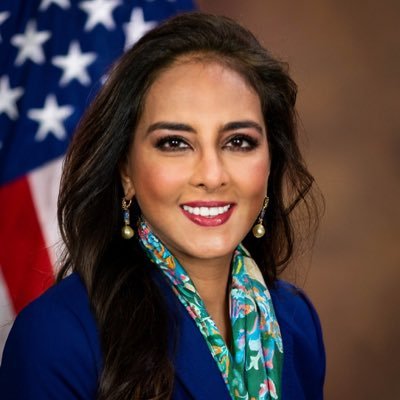
Harmeet Dhillon is stepping down as the head of the Civil Rights Division. She confirmed the decision herself. She resigned weeks before the midterms and was asked to stay through the election. The announcement landed the day after Democrats took both chambers of Congress. She plans to go back to private practice at the firm she founded years ago in California. That is the plan she stated earlier this year. The work she leaves behind is the part that will matter longer than the resignation letter.
Serving my country as AAG for Civil Rights has been the honor of a lifetime. We ushered in the downfall of illegal DEI, we fought to protect women and girls’ sports, and so much more. I want to thank President Trump for giving me this opportunity. I look forward to what’s next!
— AAGHarmeetDhillon (@AAGDhillon) November 5, 2026
She arrived in April 2025 after a Senate confirmation. Within months roughly three-quarters of the division’s existing attorneys had left, either through a government retirement package or by resigning. She has said the remaining staff and the new hires she brought in were people willing to enforce the statutes as written rather than as previous administrations preferred. The division under her direction filed lawsuits and opened investigations that previous leadership had not prioritized.
Those cases included demands for voter-roll data from multiple states to check for non-citizen registration. She defended the effort in public as an attempt to enforce existing law, noting that even the prior administration had prosecuted a small number of such cases. The division also pursued universities over admissions practices that appeared to discriminate against white and Asian applicants and over campus environments that targeted Jewish students after October 2023. Settlements and lawsuits against several large schools followed. A new focus on the Second Amendment produced a suit against the Los Angeles County Sheriff’s Department over long delays in issuing concealed-carry permits. Consent decrees that had kept federal monitors over certain police departments were ended. Investigations into police departments that had been open under the previous administration were closed.
The net effect was a smaller division that spent its resources on religious liberty, parental rights in schools, antisemitism on campuses, election-list integrity, and gun-permit delays rather than the pattern of consent decrees and disparate-impact cases that had defined the office for decades. Supporters called it even-handed enforcement. Critics called it a reversal of the division’s historic mission. Both descriptions fit the record she leaves.
🚨🇺🇸 BREAKING: Marco Rubio is on resignation watch. Sources say he’s preparing to quit as Secretary of State to launch a 2028 presidential bid, wanting to distance himself from Trump and the Iran war. He’s perhaps the leading Republican candidate right now, ahead of JD Vance and Ron DeSantis. Vance moved fast after the midterms, publicly blaming the Iran war for the losses. Rubio hasn’t. But behind the scenes, he’s been notably quiet on Iran for months. Up to 5 cabinet members are reportedly preparing to exit the administration. The 2028 race is already gearing up… Source: The Independent / Writer: Michael
— Mario Nawfal (@MarioNawfal) November 5, 2026
What Comes Next
Dhillon has already said she intends to return to private practice and continue representing plaintiffs on the same kinds of cases she pursued inside the government. The firm she founded has handled free-speech, civil-rights, and election-law matters for years. She has indicated that the experience of running the division will shape how she chooses clients and arguments going forward. With a Democratic Congress now in place, the statutes and regulations she used will face more scrutiny, and any remaining investigations will have to survive new oversight. Private practice gives her the ability to keep filing the cases without needing the department’s resources or the administration’s daily approval.