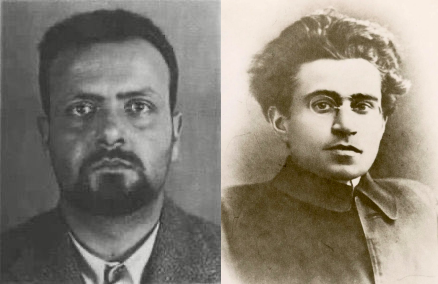
The 20th century’s most consequential political engineering may not have come from politicians, but from two extreme-left Marxist theorists writing in prison cells, cut off from any immediate hope of influence. Antonio Gramsci, imprisoned in Mussolini’s Italy, spent his final years (1929–1935) working out why the revolution Marx predicted never arrived in the West — concluding that ruling power rests less on force than on “cultural hegemony,” the shared assumptions people absorb about how the world simply is. His answer was strategic patience: a “long march through the institutions,” capturing schools, media, courts, and civil service from within until the culture’s underlying values shift without anyone declaring a revolution at all.
A decade later, on the prison island of Ventotene, Altiero Spinelli reached a parallel conclusion aimed at a different target: the nation-state itself. His 1941 Ventotene Manifesto argued that national sovereignty was the root cause of war and fascism, and proposed dissolving it — not by force, but by incremental, irreversible integration: economic ties first, then shared institutions, law, and currency, each step designed to make reversal more costly than acceptance.
Neither man lived to see his ideas fully realized — Gramsci died within days of his release in 1937, Spinelli in 1986, before the euro or the completed European project. Yet both are credited, by admirers and critics alike, as intellectual architects of institutions that now shape the lives of millions: Gramsci in the long transformative destruction of Western universities, media, and cultural life; Spinelli in the literal design of the European Union, where a Brussels building and an internal parliamentary caucus still bear his name.
What unites them is a shared theory of change — that the most durable revolutions are the slow, bureaucratic, and largely unannounced ones.
If you are active on X – and if you’re not you are missing the only true news source – follow this Pole: Szczawinski.
Antonio Gramsci – The Most Dangerous Intellectual of the Twentieth Century.
— Krzysztof Szczawinski 🇵🇱 (@Kristof_Poland) September 5, 2026
Not the most famous. Not the most read. The most dangerous and the most consequential – because he was the one who figured out why the revolution kept failing, and what to do instead. The man who… https://t.co/jvd7MHKRDo pic.twitter.com/EB0fbaeyEL