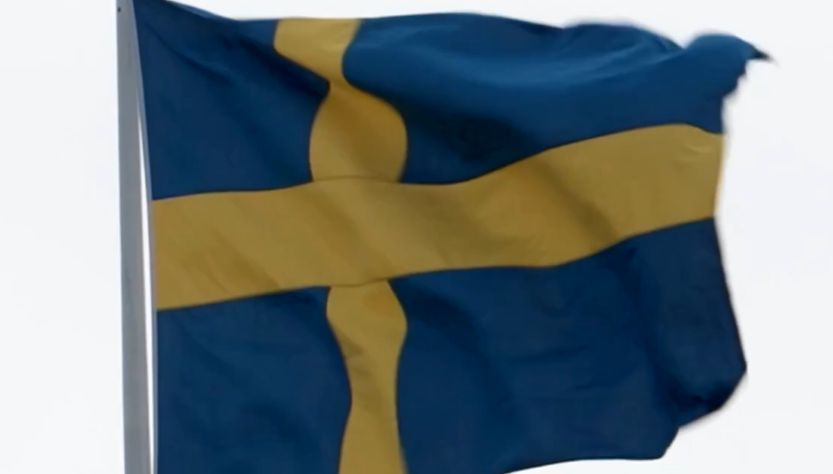
Sweden is not 25 percent Muslim. Repeat it until the chain email dies. The country does not put religion on the census. Congregation rolls sit around two hundred thousand. Broader counts of people with roots in Muslim-majority countries land near eight to ten percent — call it eight hundred thousand to a million in a nation of ten and a half million. Malmö has districts that look like a different country. The nation does not.
What happened Sunday is still a warning. It just is not the cartoon.
What Sunday Actually Was
Sweden voted September 13. With most ballots in, the left bloc led 176 seats to 173. Thirty thousand votes. Postal and overseas still trickling. Magdalena Andersson’s Social Democrats remain the largest party at about 28 percent. The right that spent four years tightening asylum, citizenship, and gang law is one bad envelope from opposition.
That is not a landslide. It is a photo finish in a 349-seat room. The finish was not delivered by “Sweden is a quarter Muslim.” It was delivered by a smaller, denser, more reliable pile.
🚨 BREAKING: Sweden’s high-stakes general election is too close to call, according to an analysis of early results that suggests a late surge in support for the right.
Full story: https://t.co/aKt4xSAxQZ pic.twitter.com/URs002ng74
— POLITICOEurope (@POLITICOEurope) September 13, 2026
About 13 percent of eligible voters now have non-European origins — up from 3 percent in 2002 and a rounding error in 1982. Exit numbers: seven in ten of that group backed the left package. Pre-election soundings of Muslim respondents had the Social Democrats, the Left, and the Greens near 85 percent. In Rosengård Centrum in Malmö the left took ninety-five percent. In some Stockholm immigrant precincts the same shape. Turnout ticked up in those districts while the national rate eased. In an election decided by a few tens of thousands, that is the whole game.
The right did not “intend to start deporting the Muslims” as a campaign slogan you can print on a hat. They ran on crime, citizenship, and the gang funerals that have become a Swedish weather report. They lost the math by three chairs. An 85 percent bloc inside a growing slice does not need to be a majority of the country. It needs to be larger than the margin.
🇸🇪 Video shows a long line of voters outside a polling station in one of Sweden’s immigrant-heavy neighborhoods as the country votes in a closely fought national election.
An initial SVT exit poll put the center-left opposition ahead with 51.3% of the vote, compared with 46.8%…
— NewsForce (@Newsforce) September 14, 2026
🇸🇪 Swedish election update 🚨
Things are VERY close here now. This is how foreigners destroy elections. Just a few % voting can change your entire country’s course:
🔴 Centre-Left Opposition Bloc
Total Projected Seats: 175 to 176 seats
Popular Vote: ~49.2%🔵 Right-Wing… https://t.co/GHkXP5s4jW
— Saskia (@Saskiaaa_____) September 14, 2026
Germany and France Are Not Copies. They Are Rhymes.
Germany’s Muslim population is estimated in the mid-to-high eight percent range — millions of people, still a minority, concentrated in the old West, shifted from Turkish guest-worker stock toward Syria, Iraq, Afghanistan. After the last federal vote, Muslim citizens broke heavily left. The AfD can win an eastern state and still hit the firewall. The arithmetic is the same species as Sweden’s: a high-turnout, high-loyalty minority plus a native left that will not touch deportation as policy.
France sits at the top of the Western table, commonly estimated high single digits heading toward about 9 percent by the end of the decade. Banlieues vote like Rosengård. National politics is a decades-long argument about laïcité, no-go talk, and whether the next interior minister is allowed to say the word. Neither country is “lost” in the sense that the phone book is now a mosque directory. Both have the Swedish problem in slower motion: fertility, chain migration, citizenship, and a left that treats the new electorate as a constituency instead of a question.
How Close Is Here
The United States has about 5.5 million Muslims. That is in the neighborhood of 1.6 percent of the country, about 1 percent of adults. The community doubled in twenty years. It is still smaller than Swedish background counts as a share of the nation. It is also not one voting machine. American Muslims are Pakistani, Arab, African-American convert, Bosnian, Iranian exile — spread across states, speaking English, sitting in a two-party system that does not award 176 seats for 28 percent.
We do not have Malmö. We have Dearborn, parts of Minneapolis, a stretch of Northern Virginia, a handful of machine precincts. Those places can decide a House seat. They cannot, at present, flip a Riksdag. Citizenship here is slower to mint a national bloc than Sweden’s old rules, which kept processing applications while the new harder law was still in the oven. That delay is how you grow an electorate faster than you grow an assimilation story.
The American risk is not that next November is Stockholm. The risk is importing the Swedish habit: high-volume settlement from incompatible legal cultures, fast papers, concentrated housing, and a party that discovers it can win a knife-edge with 70 percent of the new file. We already run that experiment in miniature in sanctuary cities. We are not at 13 percent non-European electorate with 85 percent one-way traffic. We would have to work at it.
The Part That Is True Without the 25 Percent
Parallel society is not a myth because the national percentage is 8. Crime clusters, cousin marriage, grooming scandals, grenades in stairwells — Sweden earned its reputation the hard way. Voting as a bloc for the side that will not deport is not a conspiracy. It is interest. People vote the welfare state and family reunification that let their cousins in. Native voters who wanted the opposite discovered that “the people” now includes a million people who were not in the picture when the folkhemmet was designed.
America First is not “they’re all the same.” It is “do not build the Swedish electorate on purpose.” Pause the inflow. Enforce the law you already wrote. Naturalize slower than you import. Scatter instead of stacking. Measure crime and welfare by origin even when the spreadsheet makes a dean cry. If you want the Swedish Sunday, keep doing the Swedish Tuesday — generous rules, no numbers, and a political class that calls the result diversity until the seat count flips.
Sweden is not a quarter Muslim. Sweden just showed what 8 to 10 percent can do when it votes like 85 and the rest of the country splits down the middle. That is close enough to study. It is not close enough to copy.