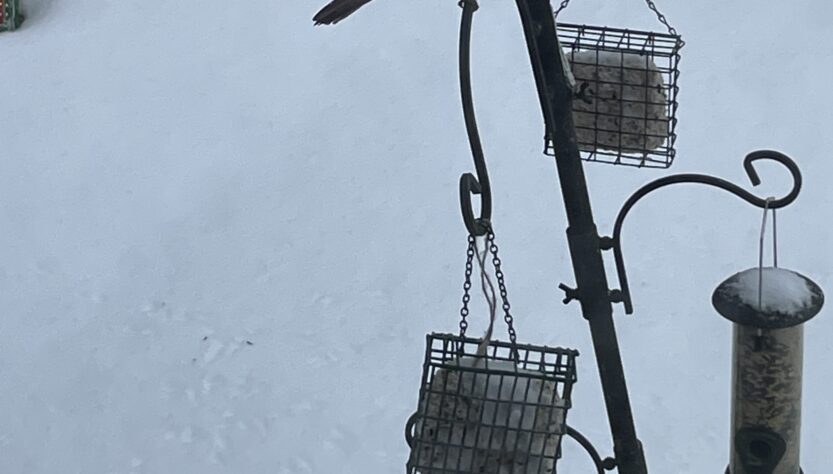
If you hang a feeder this winter, the bird scientists behind Cornell’s Project FeederWatch want you to wash it every week or two, because a dirty feeder can spread disease through the whole flock.
FeederWatch is run by the Cornell Lab of Ornithology and Birds Canada. Its season opened Nov. 1 and runs through April 30, so this is the time to get your feeders in shape.
Why it matters
When birds crowd around a feeder, they can pass viruses and bacteria to one another, either by direct contact or through droppings, FeederWatch says. Leftover seed and hulls can harbor the germs that make birds sick.
The group points to House Finch eye disease, a form of conjunctivitis spread through eye discharge, which caused serious declines in North American House Finches in the 1990s. Salmonella and E. coli spread when birds eat food contaminated with droppings. In Britain, an outbreak of trichomoniasis linked to feeders hit European Greenfinches hard.
How to clean a feeder
FeederWatch recommends cleaning seed and suet feeders every week or two, and more often in wet weather or when lots of birds are visiting. Take the feeder apart, scrub off the debris, and wash the parts in warm water and dish soap. Rinse well and let everything dry completely before you refill it. A dishwasher works well for feeders that can take it, and a bottle brush helps with tubes.
The group advises against wooden feeders, because they cannot be washed thoroughly.
To disinfect, soak the cleaned parts for 10 minutes in one part bleach to nine parts water, then rinse and dry. If you would rather not use bleach, boiling water or diluted vinegar will add some protection, though FeederWatch notes that not every alternative meets disinfectant standards.
Wear gloves when you handle feeders, wear a mask when you rake under them, and wash your hands afterward.
Keep the area clean too
Change birdbath water every couple of days and scrub the bath weekly. Rake or sweep under your feeders, since spilled seed and droppings are unhealthy for birds and draw rodents. Moving your feeders now and then keeps waste from piling up in one spot.
If you see a sick bird
Fluffed-up feathers, sluggishness, growths and crusty eyes are signs of illness, according to FeederWatch. Clean and disinfect more often, and think about taking feeders down for a while if few neighbors feed birds. If your neighborhood is full of feeders, removing yours may just crowd birds at the others. If birds show signs of salmonella or trichomoniasis, consider retiring tray feeders, which collect droppings.
Two more ways to protect them
Birds hitting windows is common around homes, FeederWatch says. Mark the outside of the glass with dots, tape or string spaced no more than 2 inches apart, or put screens on the outside. FeederWatch also urges cat owners to keep cats indoors, noting that cats kill hundreds of millions of birds a year in North America.
Count your visitors
You can turn your feeder into a family project by joining FeederWatch. You pick a spot you can see easily, choose two consecutive count days as often as once a week, and record the most birds of each kind you see at one time. U.S. participants pay $18 a year, and counts can be entered on the website or the FeederWatch app.
The program says the ordinary counts matter most. Even if you count just once all season, “your data are valuable.”