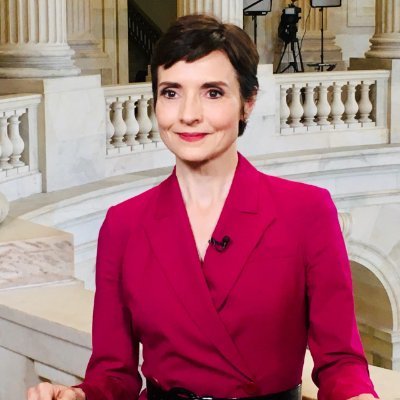
Independent investigative journalist Catherine Herridge has reported that newly declassified records show China engaged in blackmail efforts targeting the Biden family. The documents were prepared for inclusion in the President’s Daily Brief. Herridge, reviewing material released under the current administration related to Chinese election interference and influence operations, stated she found explicit references to blackmail by China and concluded it was probably aimed at the Biden family.
🚨🚨 BOMBSHELL JUST DROPPED — THERE IS NO HIDING THIS ANYMORE 🚨🚨
Investigative journalist Catherine Herridge just exposed the documents.
China was BLACKMAILING the Biden family… and it was sitting in President Biden’s own daily brief.
She found the records. She held them up on… pic.twitter.com/avLewIjSUG— John F Kennedy Jr (@John_F_kJr) August 10, 2026
What Herridge Actually Said
In a July 2026 appearance, Herridge described spending hours with the records. “I found these records which are talking about blackmail by China. It was for President Biden’s daily brief. I can conclude, I think, that it was probably about targeting his family.” She criticized legacy media for “willful blindness,” noting the material was available and required only basic effort to examine. The underlying intelligence assessed the Chinese threat as credible.
The publicly discussed versions of these records do not quote a sentence that says “China is blackmailing Joe Biden with the following specific material.” Herridge’s assessment rests on the content of the blackmail references, the timing, the audience (the PDB), and the well-documented pattern of Chinese engagement with the Biden family.
The Larger Pattern That Made Blackmail Plausible
This did not emerge in a vacuum. Congressional investigations and bank records previously established that millions of dollars flowed from Chinese-linked entities into Biden family accounts and related companies during the years Joe Biden was out of office and while he was vice president. Hunter Biden’s dealings with CEFC China Energy and related networks produced wire transfers, retainers, and layered payments. Some of that money reached Joe Biden himself in the form of a documented $40,000 check labeled a loan repayment that originated from Chinese-linked funds.
There were also references in business communications to “the big guy” and discussions of equity stakes involving the former vice president. These arrangements created obvious leverage points. A foreign power that understands how American political families monetize access does not need a secret recording of a president to apply pressure. Compromising material on a son, financial dependencies, and the threat of public exposure of influence-peddling can be enough.
Chinese intelligence has a long track record of collecting “black materials” on foreign officials and their relatives. The fact that such collection targeting the Bidens appeared in material destined for the highest levels of the U.S. government is the core of Herridge’s reporting.
Was the Most Powerful Man in America China’s Lackey?
The available public evidence does not prove that Joe Biden received a specific demand from Beijing, complied with it, and altered U.S. policy as a direct result. What it does show is a family that took large sums from Chinese-linked sources, created documented vulnerabilities, and operated in an environment where Chinese intelligence was actively collecting material suitable for coercion. When those vulnerabilities are known at the presidential intelligence level and the same family later occupies the White House, the national security risk is real regardless of whether a formal blackmail exchange can be proven in open sources.
Policy outcomes during the Biden years—relative restraint toward China on certain technology and investment issues early on, the handling of the Hunter Biden laptop story, and the broader reluctance of much of the intelligence and media apparatus to examine the family’s foreign money—fit a pattern of protection. Correlation is not the same as a signed confession. But the combination of financial entanglement, intelligence references to blackmail, and institutional reluctance to dig is not something a serious country ignores.
Herridge’s reporting adds another piece to a file that was already thick. China did not need to install a puppet. It only needed a family willing to do business and an American system unwilling to treat the resulting vulnerabilities as a crisis. That is the more accurate, and more damning, picture.