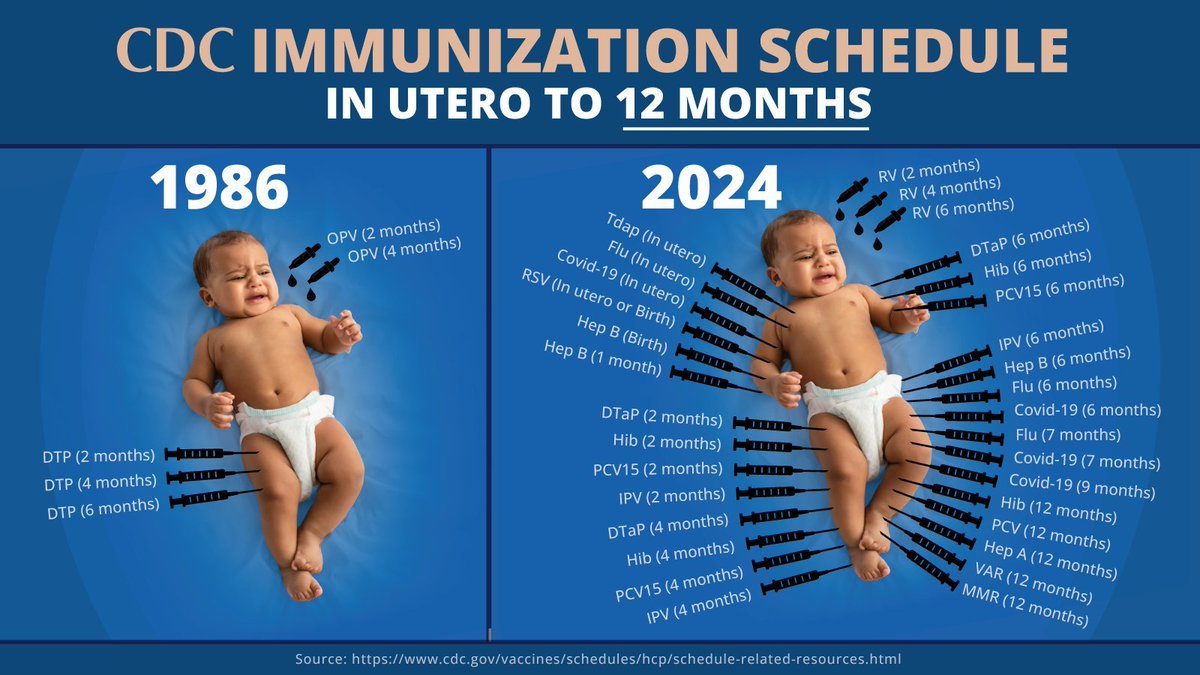
In the Oval Office on a Monday in August 2026, President Donald Trump signed an executive order while Health Secretary Robert F. Kennedy Jr. stood beside him. The document was titled “Delivering Gold Standard Childhood Vaccine Recommendations for Americans.” With that signature, the administration formalized a leaner federal schedule that it says brings the United States into line with peer nations and gives parents more control over timing and number of shots.
🚨 IT'S OFFICIAL: By the stroke of pen and flanked by RFK Jr., President Trump establishes a new US vaccine schedule that decreases the number of jabs from 72 to 11 — and spreads them out over multiple visits, rather than pumping the child all at once
— War Correspondent (@warDaniel47) August 24, 2026
"That's a big one in my… pic.twitter.com/G1AbVP2Wik
The order recognizes three categories of childhood immunizations. The first—recommended for all children—covers protection against 11 diseases: measles, mumps, rubella, diphtheria, tetanus, pertussis, polio, Hib, pneumococcal disease, HPV, and varicella (chickenpox). The remaining shots move either to high-risk groups only or to “shared clinical decision-making,” meaning a conversation between parent and doctor rather than a blanket recommendation. Influenza, COVID-19, rotavirus, hepatitis A and B, and meningococcal vaccines fall into those more flexible buckets. Insurance coverage is supposed to continue for all of them.
Trump has repeatedly described the old schedule as requiring “72 jabs” for “beautiful, healthy, lovely, delicate little children,” with “large amounts, like vats, of vaccine” pumped in at once. That figure comes from counting every dose component across childhood and adolescence, including annual flu and COVID shots through age 18 and treating combination vaccines as separate injections. Pediatric groups have called the 72 number inflated and say a more typical count of actual shots under the prior schedule was closer to 30 by early childhood, or higher if every annual dose is included. The new framework is framed as reducing the universal list from 18 diseases (circa 2024) to 11.
A second, equally visible change is spacing. The order states that, “to the maximum extent feasible, all childhood immunizations should be administered at separate medical visits.” It also calls for splitting the combined MMR vaccine into three single-disease shots once those products are available in the United States. Trump told the room he expected “amazing results” from breaking the schedule up rather than delivering multiple vaccines in a single appointment. The administration presents this as a matter of parental choice and caution rather than a claim that simultaneous vaccination overwhelms the immune system.
The rationale offered in the White House fact sheet and the earlier HHS assessment is comparative. Officials say the United States had become an outlier, recommending more vaccines and more doses than countries such as Denmark, which maintains high uptake with a shorter list and greater emphasis on public trust and education rather than mandates. In 1980 the U.S. schedule involved 23 doses against 7 diseases; by 2024 it had grown substantially. The new “gold standard” recommendations are described as the consensus core that peer developed nations actually use.
This was not the first attempt. In January 2026 the CDC, acting on a December 2025 presidential memorandum, issued similar changes. Those were later blocked in court. The August order tries again, directing federal agencies to treat the new categories as guiding policy, urging states that maintain school requirements to consider updating them, and instructing the Justice Department to challenge state laws the administration views as conflicting with parental authority, religious liberty, or medical exemptions. Kennedy, long a critic of the expanding schedule, called the result a restoration of informed consent and a way to rebuild trust.
What parents actually encounter will still depend on their pediatrician, their state, and their insurer. Combination vaccines remain available. Nothing in the order removes products from the market. The practical difference is that the federal government no longer presents every previously recommended shot as routine for every child, and it explicitly prefers spreading visits rather than clustering them. Whether that produces the clearer, more trusted system the administration promises, or simply more variation from clinic to clinic, is now a live experiment playing out in exam rooms across the country.